ORIGINAL REPORT
STEERING-BY-LEANING: FEASIBILITY OF UTILIZING DYNAMIC BACKRESTS TO CONTROL STEERING IN MANUAL WHEELCHAIRS
Reto TOGNI, MA/MSc1, Karin DISCH, MSc1, MichaeL PLÜSS, MSc1, Irina LERCH, BSc2, Roland ZEMP, PhD1 and William R. TAYLOR PhD1
From the 1Laboratory for Movement Biomechanics, ETH Zürich and 2Spinal Cord Injury Center, Balgrist University Hospital, Zürich, Switzerland
Objective: Steering-by-leaning is a promising innovation for manual wheelchairs. It may enable improved energy efficiency, one-handed manoeuvrability, and increased trunk activity during wheelchair use in daily life. To explore the feasibility of this concept, the lateral trunk function of active wheelchair users was assessed before comparing 3 preliminary dynamic backrest designs in a virtual steering exercise.
Design: Repeated measures, cross-over study.
Subjects: A convenience sample of 15 individuals who had been full-time users of manual wheelchair for at least 1 year.
Methods: Active core strength and lateral leaning range of motion were captured while sitting freely. Participants subsequently tested 3 dynamic wheelchair backrest designs on an individually adjusted laboratory wheelchair prototype by performing a virtual steering exercise. Deviations from a target movement path were analysed using repeated measures analysis of variance and Pearson correlation coefficients.
Results: Functional leaning range of motion ranged from below 10° to almost 70°, but increased significantly with use of the simplest backrest design based on a 2-dimensional hinge joint. No correlation was found between functional levels and performance parameters in the virtual steering exercise.
Conclusion: Using an individually fitted and calibrated design, upper body-actuated wheelchair steering using a laterally tilting backrest is accessible to wheelchair users across a wide spectrum of physical abilities.
LAY ABSTRACT
Manual wheelchairs not only enable mobility, but also provide postural support to users through passive seating elements. The consequences of static sitting, however, include pain, deformities, and pressure injuries. The concept of backrest steering in manual wheelchairs may improve overall energy efficiency while promoting active trunk movement, but its applicability is questionable given the varying levels of trunk control among users. In this study, active trunk function of 15 full-time users of manual wheelchairs was measured prior to testing 3 prototype dynamic backrest designs in a virtual steering exercise. The results highlight the broad spectrum of abilities in this population, but suggest that active movement can be supported by simple mechanisms. No meaningful relationship was found between trunk abilities and performance in the virtual steering exercise, indicating that upper body-actuated steering of manual wheelchairs is accessible to users across a wide spectrum of physical abilities.
Key words: dynamic sitting; motion control; range of motion; usability; wheelchair-user-interaction; trunk movement; steering; leaning.
Citation: J Rehabil Med 2023; 55: jrm00382. DOI: http://dx.doi.org/10.2340/jrm.v55.4439.
Copyright: © Published by Medical Journals Sweden, on behalf of the Foundation for Rehabilitation Information. This is an Open Access article distributed under the terms of the Creative Commons Attribution-NonCommercial 4.0 International License (https://creativecommons.org/licenses/by-nc/4.0/)
Accepted: Feb 14, 2023; Published: Mar 21, 2023
Correspondence address: William R. Taylor, Laboratory for Movement Biomechanics, Institute for Biomechanics, ETH Zurich, Switzerland. E-mail: bt@ethz.ch
Competing interests and funding: The authors have no conflicts of interest to declare.
An estimated 60 million people worldwide use a manual wheelchair in everyday life (1, 2). Considering the diverse needs of this population, manual wheelchairs remain surprisingly simple devices that conform to a largely unchallenged design framework. They are almost exclusively based on a box frame (3, 4) that integrates a rectangular seat pan and backrest for postural support, and uses 2 independent rear wheels with push-rims for propulsion and navigation (5). Simultaneous pushes on both wheels results in forward movement in a straight line, while braking on 1 side initiates a turn in that direction (6). This set-up offers great flexibility for rapid and efficient turns on-the-spot (7), but has been described to render wheelchair propulsion a frustrating, challenging and inefficient process (1, 8, 9) that requires the constant use of both hands, especially given the high frequency of turns required during activities of daily living (10). We have proposed new concepts in the design of manual wheelchairs (11), with mechanisms that allow directing movement by a means other than unilateral braking. “Steering-by-leaning” might combine improved propulsion efficiency, with other potential beneficial effects, such as freedom of hand usage while moving, and more dynamic sitting resulting in increased blood flow (12), back health (13–17), and trunk stability (18). However, many wheelchair users have limited control over trunk and upper body musculature, and the introduction of steering-by-leaning must not sacrifice critical safety aspects of wheelchair design. The concept of steering-by-leaning might therefore either be accessible only to people with sound trunk functionality and a good range of motion (ROM) or will have to provide sufficient dynamic stability to users.
Indeed, control over trunk (and, of course, lower extremity) musculature is often restricted in wheelchair users; for instance, due to a lesion after spinal cord injury (SCI), nerve demyelination in multiple sclerosis, or congenital disorders such as cerebral palsy. Individual functional abilities therefore clearly drive priorities in wheelchair configuration, from enabling mobility and independence (19) to maximizing propulsion efficiency and providing sitting support and safe sitting postures. The consequences of prolonged, static sitting are well known, and include pressure ulcers, chronic musculoskeletal pain, and spinal deformities (20–23). Clinicians and physiotherapists prescribe frequent relief exercises in order to mitigate such acute and degenerative pathologies (24, 25). To support this effort, wheelchair systems are clearly required to better facilitate more frequent and easy trunk movement (26), but such recommendations have rarely been implemented due to the conflicting difficulties in also providing sufficient sitting stability.
Metrics of trunk and sitting stability are often used to quantify differences between groups of wheelchair users; for instance, between high and low thoracic SCI (27), as a baseline for functional classification of athletic ability in para-sports (28), and even between able-bodied and disabled wheelchair athletes (29). Many studies have included additional measurements of trunk strength for improved indication of functional levels (27, 29–33). However, evidence-based categorization is generally considered to be lacking, possibly due to its generally low resolution, which particularly causes problems in competitive settings (34, 35). To address this issue, a series of studies has investigated the use of centre of pressure (CoP) force data to determine the limits of stability while sitting (27, 28, 30, 32, 36–40) as well as optical methods to capture reactions to perturbations (18, 38). However, data on active trunk movement in manual wheelchair users (beyond SCI) remains scarce. While some groups have used functional variables to describe the efficacy of therapeutic interventions, wheelchairs are currently personalized exclusively according to anatomical and pathological characteristics and, to the best of our knowledge, no objective metrics of trunk or upper extremity function are used to improve wheelchair fitting processes.
In order to lay the foundations for supporting dynamic sitting through novel backrest designs for steering manual wheelchairs, we designed and constructed a laboratory prototype wheelchair with a highly modular backrest in collaboration with Invacare International GmbH, Witterswil, Switzerland. The objective of the current study was to test with users the potential of 3 backrest configurations in providing dynamic stability while virtually controlling movement. Firstly, the functional ROM and trunk strength among wheelchair users was assessed in order to understand the needs of various functional groups. Secondly, participants were asked to perform a virtual exercise while the prototype wheelchair was kept stationary, enabling a direct comparison of the supported functional ROM against the unsupported condition. The scores achieved in this exercise allowed comparison of the 3 backrest designs, as well as investigation of possible relationships between trunk functional levels and virtual movement control. The results of this study aim to guide the further development of steering for manual wheelchairs.
MATERIALS AND METHODS
Inclusion/exclusion criteria
Inclusion criteria were: individuals who had been full-time manual wheelchair users for at least 1 year; at least 18 years old; and able to transfer in and out of wheelchairs without assistance. Exclusion criteria were: participants with acute physical injuries (e.g. shoulder injuries or pressure ulcers) or with untreated mental health issues (e.g. psychosis or depression), major cognitive, communication or comprehension deficits, as well as severe anatomical asymmetries (e.g. scoliosis). All subjects provided written informed consent prior to participation in this study, which was approved by the ETH Ethics Committee (EK-2020-N-106).
Wheelchair prototype
A laboratory prototype wheelchair, designed for a high degree of adjustability both in geometry as well as behaviour, was used in this study (Fig. 1). The goal was to allow direct comparisons with each user’s conventional wheelchair, as well as between different configurations of a potential steering system. Before each measurement, the geometry of the prototype wheelchair was adjusted to match the seat height (front and rear), width and depth, as well as knee-to-heel length, backrest height, and angle of the participant’s own wheelchair as closely as possible. In addition, participants used their own wheelchair cushions for comparable sitting stability and comfort.
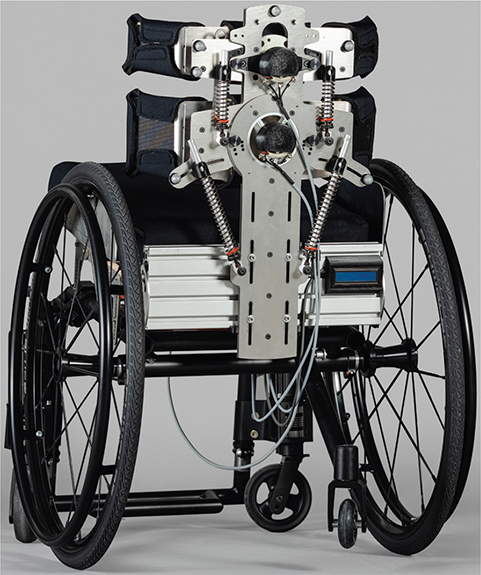
Fig. 1. A highly modular laboratory prototype wheelchair was used in this study to allow different backrest leaning patterns to be investigated.
Modular backrest configurations
Central to the prototype functionality is a highly modular backrest that comprises an upper and a lower segment. Lateral leaning was approximated by backrest rotation in the frontal plane, whereby the rotation centre of the upper segment was able to rotate around the lower segment, thus producing a kinematic chain that could also be mechanically constrained to 3 distinct movement behaviours (Fig. 2). The height of the lower rotation centre was placed at the level of the lumbar spine (approximately at L3), with the rotation centre of the upper segment approximately 12 cm higher.
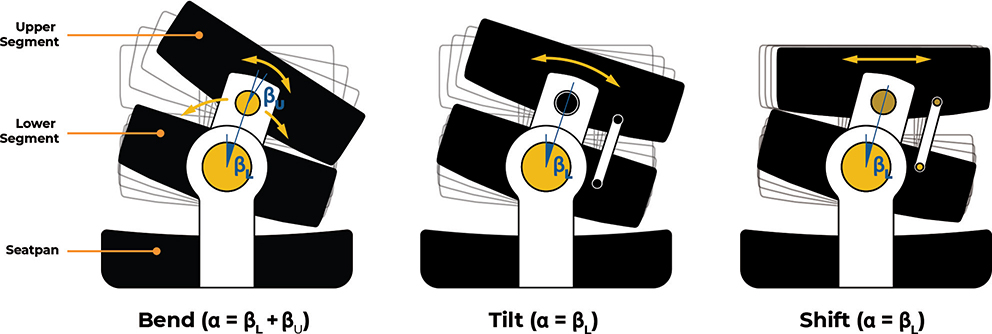
Fig. 2. The behaviour of the modular backrest could be configured to 3 different modes without the need for participants to transfer out of the wheelchair.
Using this prototype configuration, a “Bend” was considered when both segments were free and able to rotate individually to follow the user’s movement. In the “Tilt” mode, the 2 segments were rigidly connected to one another, simulating a simple hinge joint that allowed lateral leaning primarily through lumbar flexion. Lastly, in the “Shift” configuration, the upper segment was kept horizontal by use of a 4-bar-linkage mechanism that produced counter-rotation of the upper torso with the goal to maintain stability by keeping the head and shoulder segments above the area of support. Limits to the ROM of the backrest were set based on a maximum leaning test to prevent unstable trunk motion. In addition, springs were included to help users return to an upright sitting position. Three different options for spring stiffness were available, with choices based on the personal preferences of the participants.
Rotation angles of each segment were measured at 12-bit resolution, using 2 10-Ohm low-tolerance wire potentiometers (DP60 10R J, Widap AG, Schmitten, Switzerland) to generate a precise steering signal, α, on an Arduino Due microcontroller (Arduino.cc. Ivrea, Italy). For “Bend” movements, the angles of the upper and lower segment were summed (α = βU + βL), whereas for “Tilt” (upper segment fixed to βU = 0°) and “Shift” (Upper segment constraint by 4-bar linkage, βU = –βL), the angle of the lower segment was taken (α = βL). This steering signal, α, would normally be translated into a steering motion of the front wheels. In this study, however, the steering signal was transmitted to a tablet computer via Bluetooth Low Energy at a frequency of 40 Hz as an input to a virtual steering exercise while the wheelchair remained stationary (Fig. 3) (see Virtual steering exercise section, below).
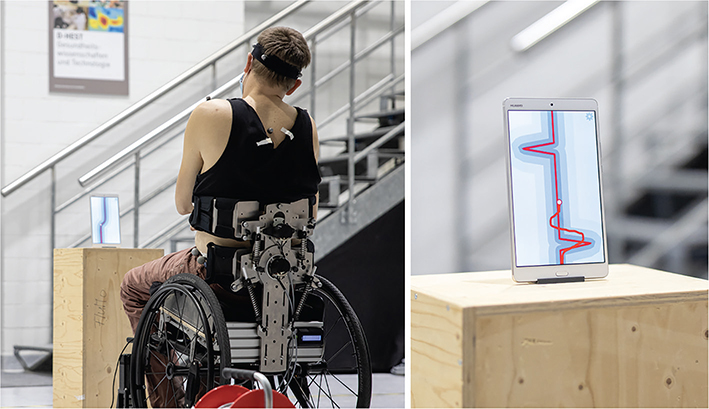
Fig. 3. Participant controlling the movement of a dot on a screen through backrest movement during the virtual steering exercise. Subjects were instructed to follow a target path as closely as possible, as shown on the right.
Trunk function assessment
The measurements comprised 2 main experimental units: firstly, functional trunk control was assessed in a series of simple leaning tasks to capture participant’s trunk mobility and strength while sitting freely on a seat without a backrest. After transfer to the prototype wheelchair, the different backrest mechanisms were tested in random order. For each test, trunk movement was measured optically using a motion capture system (Vicon, Oxford Metrics Group, Oxford, UK). Participants were asked to wear a tightly fitting sleeveless shirt to allow the exact placement of 14 reflective skin markers on bone prominences on the pelvis (left/right anterior superior iliac spine, left/right mid superior iliac spine, left/right posterior superior iliac spine), torso (left/right acromia, sternum, C7 vertebra) and 4 markers on the head, whereby the 2 markers on the posterior superior iliac spines were removed for tasks undertaken in the wheelchair. In addition, 3 markers were placed on each backrest segment.
To assess lateral trunk mobility (no backrest support), participants were asked to sit freely and as in an erect posture as possible with their hands crossed in front of their chest. This body position was recorded as their reference position. Thereafter, maximal lateral flexion was captured 3 times, alternating from 1 side to the other. As an indicator of trunk mobility, unsupported lateral trunk ROM was calculated. The centre of rotation was defined as the centre of the pelvis markers in the reference position, projected to the height of the seat. Frontal plane rotation angle was then calculated using the centre of the 4 torso markers (left/right acromia, sternum, C7 vertebra) and the reference position representing 0°. ROM was computed as the sum of the maximal deflection angle on each side.
To assess trunk strength, participants were asked to push as hard as possible against a dynamometer that was placed against their acromia. Here, a 1D load cell (80×12.7×12.7 mm; 30 kg max force; 2.0/mV/V sensitivity) and an analogue-to-digital converter (HX711, SparkFun Electronics, Niwot, CO, USA) were used to capture force signals that were processed on a HUZZAH32 ESP32 Feather microcontroller (Adafruit, New York, NY, USA) at a frequency of 80 Hz. Lateral trunk moments were determined by multiplying the acromion force signals by trunk lever arms, as described by Gabison et al. (30) (distance from the respective greater trochanter to the point of acromion measurement). Trunk strength was then estimated as the mean of the left and right maximum lateral trunk moments, normalized to body weight.
Virtual steering exercise
To test how well participants would be able to control wheelchair movement using the 3 backrest configurations, a single 3mins 46s long virtual steering exercise was performed with each configuration. Initially the tasks and structure of the virtual exercise were explained to subjects, and they were given time to practise the respective backrest movement before each trial. For the trials, the steering signal, α, was used to control lateral movement of a dot on a screen (leaning to one side would cause the dot to move to that side). With this dot, participants were asked to follow a visual, target pathway within the virtual environment as closely as possible, whereby the path taken was recorded (at the same 40 Hz). For calibration, participants were initially asked to lean to each side 3 times to provide the supported trunk ROM (measured via motion capture as in the trunk function assessment) as well as the respective backrest ROM (measured on the wheelchair prototype). Each subject’s maximum ROM was defined ±100% of the possible lateral movement of the dot on the screen to individually adjust the translation ratio of steering signal to virtual steering movement. The target path maximally covered 90% of the defined 100% of a subjects maximum ROM.
The virtual steering exercise comprised 3 main sections. In an “agility” section, participants needed to reach a maximum lean and return to upright within 1 s, 5 times each side. Here, the peak to peak error between the achieved lean and the point of maximum target path lean within a window of ±0.5 s was calculated in order to gauge performance (Fig. 4). During the “endurance” section, the predefined path repeatedly prompted participants to reach and continuously hold a set, unstable, position over a period of time whereby the root-mean-square error (RMSE) was calculated during a 5-s window. Lastly, the “coordination” section tested participants’ abilities to make fine adjustments to the path and directly transition from 1 leaning position to another. At 10 extrema/inflection points, the difference between target and achieved path was taken as a query point error. Finally, to gauge overall performance, a mean error was calculated using all the resulting 30 values (10 from each section), whereby lower levels of movement errors indicated better performance.
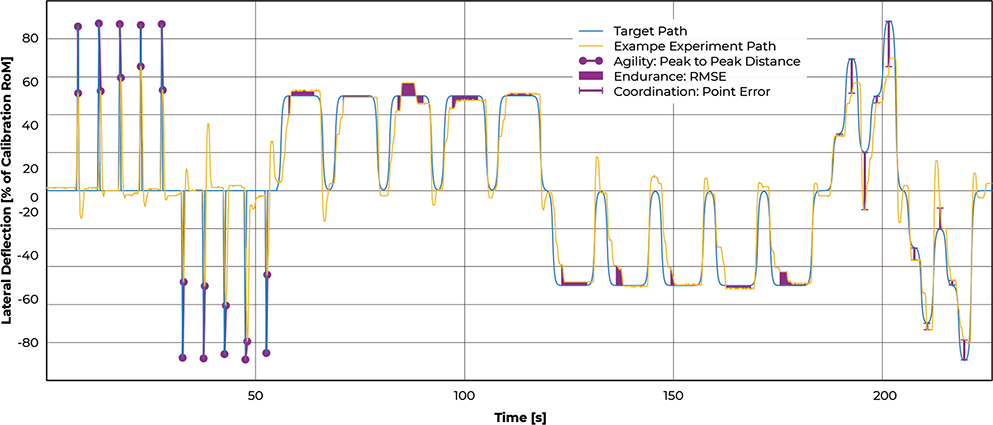
Fig. 4. Example path from the virtual steering exercise, showing agility, endurance and coordination sections. Blue line indicates the target pathway provided to participants, while the yellow line shows an example of 1 participant’s movement response. Dots, shaded purple regions, and error bars are shown in the respective sections to indicate movement errors during the assessed windows. RMSE: root-mean-square error.
Parameters and statistics
Measurement outcomes for each participant comprised trunk ROM and strength while sitting freely, supported trunk and backrest ROM with a resulting ratio as well as the error values for agility, endurance and coordination for the different backrest configurations and an overall mean error.
Statistical analysis was performed using SPSS Statistics (v27, SPSS AG, IBM, Chicago, IL, USA). Bivariate Pearson correlation tests were used to evaluate possible relationships between trunk ROM and strength (whereby a simple linear regression further visualizes the correlation) as well as between trunk functional parameters and mean errors in the virtual exercise (41). One-way repeated measures analyses of variance were performed to assess effects of the backrest configuration (Bend, Tilt, Shift, sitting freely was included to analyse trunk ROM) on trunk ROM as well as on the errors/performances in the virtual exercises. Bonferroni corrected post-hoc tests were used to compare the supported/unsupported trunk ROMs and the performances with the different backrest configurations. The significance level was set at p<0.05.
RESULTS
Participant characteristics
A convenience sample of 11 men and 4 women, age range 18–61 years (mean (SD) 39.5 (14.7) years) who had been using wheelchairs for an mean of 10.7 (8.3) years was included in this study. Ten of the 15 participants were individuals with a spinal cord injury (SCI), 3 had cerebral palsy, 1 had multiple sclerosis, and 1 syringomyelia. Among participants with SCI, 8 were paraplegic (TH3–TH12) and 2 tetraplegic (C5–C7).
Trunk function
The results of trunk strength and range of motion while sitting freely were highly variable and ranged from 0.20 to 0.84 Nm/kg mean (SD) 0.49 (0.17) Nm/kg and from 9.25° to 68.78° (27.87 (18.14)°), respectively. Interestingly, these values correlated highly (r = 0.703, p = 0.003) (Fig. 5).
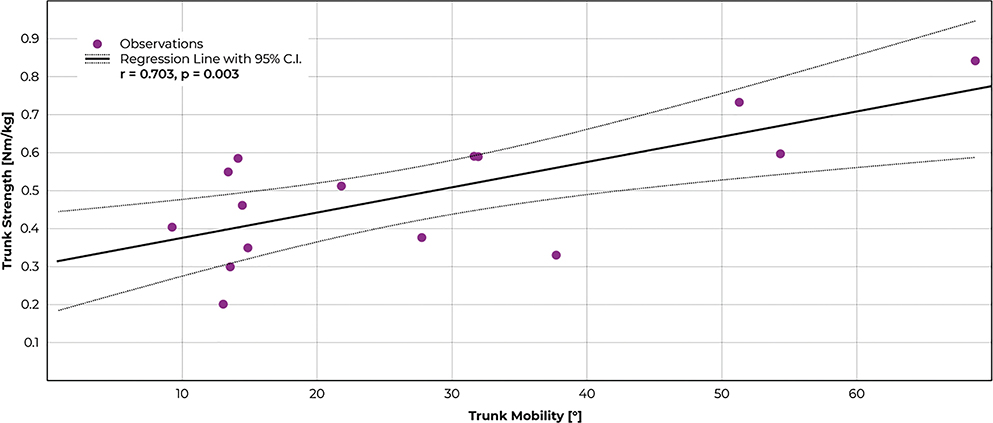
Fig. 5. Scatterplot of measured lateral trunk range of motion and trunk strength while sitting freely, correlated using linear regression. 95% CI: 95% confidence interval.
Range of motion
When investigating the torso range of motion under the different backrest conditions, almost all participants showed an increase for at least 1 backrest compared with sitting freely (without support). Individual comparisons of the 3 supported torso ROMs against unsupported free sitting found an mean relative increase of 73 (SD 85) % for “Bend”, 76 (72) % for “Tilt” and 33 (90) % for “Shift”. For 2 participants, their ROM was generally smaller when sitting in the wheelchair and 1 participant felt unable to use the “Shift” backrest.
Overall, an almost equal torso ROM was found for the “Shift” backrest compared with sitting freely, while the other 2 configurations appeared to allow a greater ROM (Fig. 6). Here, however, a significant difference was found only for “Tilt” (p = 0.021). Importantly, no backrest was able to fully follow the trunk movement. Here, investigating the ratios between backrest and supported torso ROMs, “Bend” exhibited the least relative movement between the trunk and backrest, with a ratio of 0.72 (0.14), whereas “Tilt” and “Shift” showed ratios of 0.50 (0.14) and 0.50 (0.28), respectively.
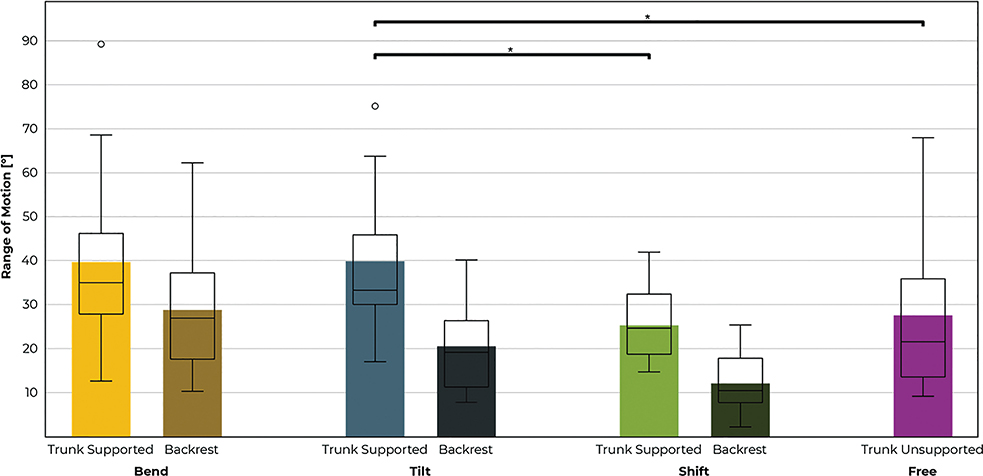
Fig. 6. Means and distributions for torso ranges of motion (ROMs) and backrest ROMs under the different support conditions as well as for sitting freely/unsupported. Torso ROM increased significantly only with the “Tilt” backrest compared with “Shift” or when sitting freely.
Wheelchair testing
In the virtual steering exercise, errors in tracking the target path on the screen were smallest for “Tilt”, which significantly outperformed “Shift” (p = 0.002, Fig. 7). Errors were highest in the agility section of the exercise, in which participants were required to rapidly reach 90% of the calibrated maximum range of motion and return to an upright position, where “Tilt” significantly outperformed “Shift” (p = 0.01). In the endurance and coordination sections, errors for both “Bend” and “Tilt” were significantly smaller than for “Shift”, but the differences between the 2 were marginal. No significant effect of experiment order on mean error in the virtual exercise was found (p = 0.631).
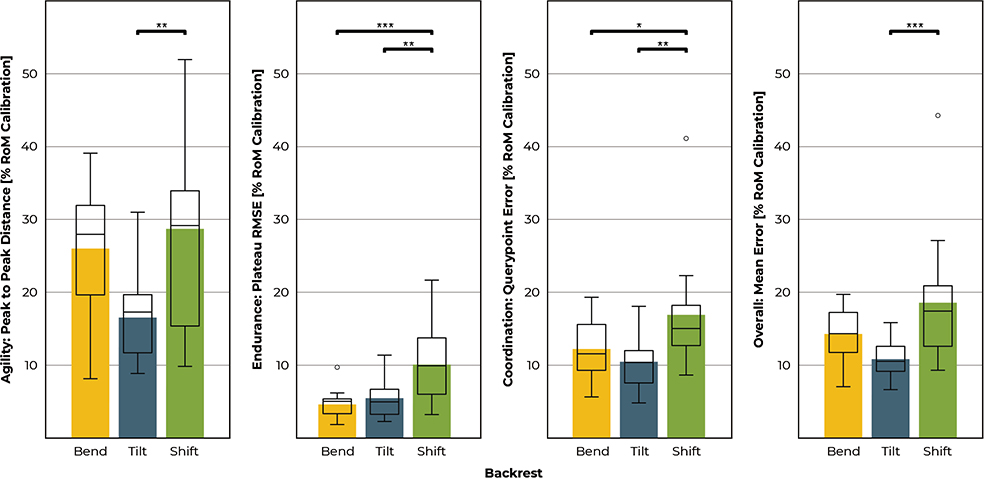
Fig. 7. Means and distributions of the calculated errors during the different sections of the virtual steering exercise for the 3 backrest configurations. RMSE: root-mean-square error; ROM: range of motion.
Expecting that participants with greater trunk control would be able to better operate a dynamic backrest, relationships between trunk ROM while sitting freely as well as the measured trunk strength and the resulting overall mean errors in the virtual steering exercise were analysed. None of the calculated Pearson’s correlation coefficients were significant (Table I).
DISCUSSION
Steering-by-leaning is a promising innovation for manual wheelchair users, but might critically depend on each user’s ability, trunk control, and their specific requirements. In an attempt to capture diverse functional groups of active wheelchair users, wide variability was observed in the results, highlighting the need for effective customization processes to be included in novel backrest designs. However, this study shows that appropriate and individually fitted backrest designs can increase functional trunk ROM and facilitate sufficient trunk movement control across various functional levels, which ranged from amputees with fully intact trunk control to individuals with cervical spinal cord injury and those lacking trunk muscle activation ability. To utilize trunk movement as a steering signal, the current results indicate that a simple 2-dimensional hinge (in this study the “Tilt” backrest mechanism) is not only sufficient to allow the majority of subjects good control over their wheelchair steering, but also resulted in the lowest errors in the virtual steering exercise.
Variability during the maximal voluntary trunk strength measurements was large, ranging from 0.2 Nm/kg to more than 0.8 Nm/kg. The inclusion of people with wide-ranging pathologies probably explains the slightly higher variability compared with other studies. In their study, Gagnon et al. only included participants with a complete motor SCI and reported 0.27 (0.10) Nm/kg for the right and 0.31 (0.11) Nm/kg for the left side (30). The current study variability for lateral leaning ROM was also extremely high and ranged from below 10° to almost 70°. Despite this high variability, the mean ROM was comparable to previous studies: Marszalek and co-workers, for instance, reported 12.3 (7.0)° for left and 12.0 (6.4)° for right flexion from their measurements with wheelchair basketball players (42). Since the current study aimed at a broad outline of the active wheelchair user group, these data now provide a basis for developing customisable support structures in dynamic seating solutions.
This study shows that movement can be supported through passive elements in wheelchair design. For most participants, their trunk lateral ROM increased when using 1 of the proposed backrest systems, at least. However, trunk lateral ROM also decreased for many subjects under less suitable conditions. Even though not a significant change overall, in some cases this decrease accounted for more than 50% of the unsupported trunk ROM. Here, the backrest effectively blocked lateral leaning by enforcing a specific movement pattern. Independent of potential steering concepts, however, we conclude that dynamic seating solutions can either facilitate or restrict functional leaning and reaching. As previously suggested, future designs should aim at maximizing users’ ROMs by providing as much freedom of movement as possible and a suitable means of support where necessary. Further studies are necessary to determine how best to individually fit such dynamic backrest systems and to develop appropriate guidelines.
To the best of our knowledge, this is the first study to test the feasibility of using the backrest as a component in the user interface of (manual) wheelchairs and for controlling steering. Overall, the achieved accuracy in the virtual exercise (mean errors ≈15% of the calibrated ROM) appeared satisfying to most participants and many suggested that improved precision in trunk movement would simply be a matter of practice. Of course, such values are to be treated with caution, as they depend highly on the laboratory conditions and the evaluation methods. Importantly, however, when investigating relationships between functional levels and performance in the virtual steering exercise, no meaningful correlations were found. In essence, this demonstrates that, within individual boundaries and with suitable means of support, similarly controlled trunk movement is possible for people with different functional levels. Framed differently, no functional minimum requirement to successfully using an individually fitted steering backrest could be found in this study.
With all backrest configurations, quick reactions in the agility section of the virtual steering exercise appeared to be most difficult for participants. This is not surprising; participants for whom sitting stability was somewhat critical described deviating quickly from a stable posture as a daunting challenge and consequently hesitated to reach to the full 90%. Similarly, reaching an extreme value quickly is prone to large errors and requires more practice than slowly adjusting the backrest position to reach a desired target, holding it over time, or carefully transitioning from one angle to the next. While rapid movements covering almost the entire ROM might not occur often in activities of daily living, participants’ difficulties in this subtask highlighted critically diverging prospects that a final design will have to balance: From a (physio)therapy standpoint, one might argue that a dynamic steering backrest should be calibrated for maximizing trunk activity, or even that the backrest ROM should be extended with practice and training, while, on the other hand, the users themselves might prioritize effortless and intuitive movement control and thus prefer the backrest to only cover a smaller than functionally possible ROM. Not only user-specific, but also application-specific (e.g. therapeutic, everyday or sports-oriented) solutions, might be needed to foster the system’s full potential.
The most simple “Tilt” backrest appeared to best balance stability and dexterity in the virtual steering exercise, allowing lowest errors in both the agility and the coordination sections, while not differing statistically from “Bend” in the endurance section. “Shift” was difficult to operate for many participants and almost consistently led to the highest errors in the virtual steering exercise. In conclusion, in developing steering-by-leaning, neither more freedom of movement enabled by “Bend” nor the overly rigid movement guidance of “Shift” will improve control over the simple “Tilt” joint.
Study limitations
A limitation of this study is the small sample size, especially considering that a wide variety of pathologies was included. However, this study offers solid indications that the applicability of the steering-by-leaning concept is more widespread than initially expected and provides insightful opportunities for further developments. It would have been interesting to capture higher resolution kinematic data on trunk movement by using additional reflective markers. Unfortunately, the seated position and the (in some cases) rather high backrest limited the number of possible bony prominences suitable for marker placement. This also impeded an accurate estimation of the individual functional rotation axis for the calculation of ROM and necessitated a standard height of the rotation centre for all participants. Here, good comparability was achieved at the cost of a more accurate characterization of participant’s movement. However, post-analysis of the motion capture data justified the original estimate. Investigation of possible additional benefits of novel leaning for turning wheelchair designs, such as greater core strength and control, as well as improved trunk balance, blood circulation, and digestion, have not been investigated here as they were beyond the scope of this study. However, further studies are necessary in order to establish the efficacy of such systems for optimally leveraging such therapeutic advantages. Ultimately, it seems very unlikely that steering systems in the current form would be used in daily life, due to the added weight and complexity resulting from the modular and highly adjustable design. Towards evaluating steering systems on manual wheelchairs in real-world environments, future iterations should focus on more simple and lightweight solutions.
CONCLUSION
This study has initiated a first step towards dynamic sitting in manual wheelchairs, and demonstrates that a major change in paradigm from wheelchairs supporting a static, ergonomic posture to wheelchairs built for promoting health and active movement during sitting is, indeed, possible and promising. Future designs for wheelchair steering need to meet individual functional levels in terms of the essential geometry, the possible ROMs, as well as the amount of support provided by the backrest shape and recoil springs, but have the potential to provide a welcome change for people across a broad spectrum of physical disabilities.
ACKNOWLEDGEMENTS
The authors thank all participants who volunteered in this study.
This study was partially funded by Invacare International GmbH and was part of the Innosuisse project 38914.1 IP-LS, entitled “Leaning for turning: motion control on manual wheelchairs”.
REFERENCES
- van der Woude LH, Dallmeijer AJ, Janssen TW, Veeger D. Alternative modes of manual wheelchair ambulation: an overview. Am J Phys Med Rehabil 2001; 80: 765–777.
- World Health Organization (WHO). Guidelines on the provision of manual wheelchairs in less resourced settings. Geneva: WHO; 2008.
- Smith RO, Scherer MJ, Cooper R, Bell D, Hobbs DA, Pettersson C, et al. Assistive technology products: a position paper from the first global research, innovation, and education on assistive technology (GREAT) summit. Disabil Rehabil Assist Technol 2018; 13: 473–485. DOI: 10.1080/17483107.2018.1473895.
- van der Woude LH, de Groot S, Janssen TW. Manual wheelchairs: research and innovation in rehabilitation, sports, daily life and health. Med Eng Phys 2006; 28: 905–915. DOI: 10.1016/j.medengphy.2005.12.001.
- Sprigle S, Huang M. Manual wheelchair propulsion cost across different components and configurations during straight and turning maneuvers. J Rehabil Assist Technol Eng 2020; 7: 2055668320907819. DOI: 10.1177/2055668320907819.
- Flemmer CL, Flemmer RC. A review of manual wheelchairs. Disabil Rehabil Assist Technol 2016; 11: 177–187. DOI: 10.3109/17483107.2015.1099747.
- Misch J, Huang M, Sprigle S. Modeling manual wheelchair propulsion cost during straight and curvilinear trajectories. PLoS One 2020; 15: e0234742. DOI: 10.1371/journal.pone.0234742.
- Storch L, inventor CIAS Inc., assignee. Manual wheelchair doesn’t veer off toward curb on sidewalks patent US9080660B2. 2015 2015/07/14/.
- Kirby RL, Ethans KD, Duggan RE, Saunders-Green LA, Lugar JA, Harrison ER. Wheelchair propulsion: descriptive comparison of hemiplegic and two-hand patterns during selected activities. Am J Phys Med Rehabil 1999; 78: 131–135.
- Togni R, Kilchenmann A, Proffe A, Mullarkey J, Demkó L, Taylor WR, et al. Turning in circles: understanding manual wheelchair use towards developing user-friendly steering systems. Front Bioeng Biotechnol 2022; 10: 831528. DOI: 10.3389/fbioe.2022.831528.
- Togni R. Embodied interaction in manual wheelchairs. Companion publication of the 2021 ACM Designing Interactive Systems Conference; 2021; Virtual Event, USA: Association for Computing Machinery; 2021, p. 36–38. DOI: 10.1145/3468002.3468239.
- Sonenblum SE, Vonk TE, Janssen TW, Sprigle SH. Effects of wheelchair cushions and pressure relief maneuvers on ischial interface pressure and blood flow in people with spinal cord injury. Arch Phys Med Rehabil 2014; 95: 1350–1357. DOI: 10.1016/j.apmr.2014.01.007.
- Holm S, Nachemson A. Variations in the nutrition of the canine intervertebral disc induced by motion. Spine (Phila Pa 1976) 1983; 8: 866–874. DOI: 10.1097/00007632-198311000-00009.
- van Deursen DL, Lengsfeld M, Snijders CJ, Evers JJ, Goossens RH. Mechanical effects of continuous passive motion on the lumbar spine in seating. J Biomech 2000; 33: 695–699. DOI: 10.1016/s0021-9290(99)00231-6.
- van Dieen JH, de Looze MP, Hermans V. Effects of dynamic office chairs on trunk kinematics, trunk extensor EMG and spinal shrinkage. Ergonomics 2001; 44: 739–750. DOI: Doi 10.1080/00140130120297.
- Pope MH, Goh KL, Magnusson ML. Spine ergonomics. Annu Rev Biomed Eng 2002; 4: 49–68. DOI: 10.1146/annurev.bioeng.4.092101.122107.
- Li CT, Chen YN, Tseng YT, Tsai KH. Biomechanical analysis of different dynamic sitting techniques: an exploratory study. Biomed Eng Online 2019; 18: 4. DOI: 10.1186/s12938-018-0621-2.
- Bjerkefors A, Carpenter MG, Thorstensson A. Dynamic trunk stability is improved in paraplegics following kayak ergometer training. Scand J Med Sci Spor 2007; 17: 672–679. DOI: 10.1111/j.1600-0838.2006.00621.x.
- Medola FO, Elui VM, Santana Cda S, Fortulan CA. Aspects of manual wheelchair configuration affecting mobility: a review. J Phys Ther Sci 2014; 26: 313–318. DOI: 10.1589/jpts.26.313.
- Valent L, Nachtegaal J, Faber W, Smit C, Kaandorp E, Pratt-Sutherland S, et al. Experienced sitting-related problems and association with personal, lesion and wheelchair characteristics in persons with long-standing paraplegia and tetraplegia (vol 57, pg 603, 2019). Spinal Cord 2019; 57: 614–614. DOI: 10.1038/s41393-019-0288-y.
- Grey JE, Harding KG, Enoch S. Pressure ulcers. BMJ 2006; 332: 472-475. DOI: 10.1136/bmj.332.7539.472.
- Olesen CG, de Zee M, Rasmussen J. Missing links in pressure ulcer research--an interdisciplinary overview. J Appl Physiol (1985) 2010; 108: 1458–1464. DOI: 10.1152/japplphysiol.01006.2009.
- Vanderwee K, Clark M, Dealey C, Gunningberg L, Defloor T. Pressure ulcer prevalence in Europe: a pilot study. J Eval Clin Pract 2007; 13: 227–235. DOI: 10.1111/j.1365-2753.2006.00684.x.
- Sonenblum SE, Sprigle SH. Some people move it, move it‖ for pressure injury prevention. J Spinal Cord Med 2018; 41: 106–110. DOI: 10.1080/10790268.2016.1245806.
- Hubli M, Zemp R, Albisser U, Camenzind F, Leonova O, Curt A, et al. Feedback improves compliance of pressure relief activities in wheelchair users with spinal cord injury. Spinal Cord 2021; 59: 175–184. DOI: 10.1038/s41393-020-0522-7.
- Sonenblum SE, Sprigle SH, Martin JS. Everyday sitting behavior of full-time wheelchair users. J Rehabol Res Dev 2016; 53: 585–597. DOI: 10.1682/Jrrd.2015.07.0130.
- Chen CL, Yeung KT, Bih LI, Wang CH, Chen MI, Chien JC. The relationship between sitting stability and functional performance in patients with paraplegia. Arch Phys Med Rehab 2003; 84: 1276–1281. DOI: 10.1016/S0003-9993(03)00200-4.
- Santos SD, Krishnan C, Alonso AC, Greve JMD. Trunk function correlates positively with wheelchair basketball player classification. Am J Phys Med Rehab 2017; 96: 101–108. DOI: 10.1097/Phm.0000000000000548.
- Rehm J, Jagodinsky A, Wilburn C, Smallwood L, Windham J, Weimar W. Measuring trunk stability for wheelchair basketball classification: a new field test. Clin Kinesiol 2019; 73: 1–7.
- Gabison S, Verrier MC, Nadeau S, Gagnon DH, Roy A, Flett HM. Trunk strength and function using the multidirectional reach distance in individuals with non-traumatic spinal cord injury. J Spinal Cord Med 2014; 37: 537-547. DOI: 10.1179/2045772314y.0000000246.
- Gabison S, Mathur S, Nussbaum EL, Popovic MR, Verrier MC. Trunk function and ischial pressure offloading in individuals with spinal cord injury. J Spinal Cord Med 2017; 40: 723–732. DOI: 10.1080/10790268.2017.1328345.
- Altmann VC, Hart AL, Vanlandewijck YC, van Limbeek J, van Hooff ML. The impact of trunk impairment on performance of wheelchair activities with a focus on wheelchair court sports: a systematic review. Sports Med Open 2015; 1: 22. DOI: 10.1186/s40798-015-0013-0.
- Gagnon DH, Roy A, Gabison S, Duclos C, Verrier MC, Nadeau S. Effects of seated postural stability and trunk and upper extremity strength on performance during manual wheelchair propulsion tests in individuals with spinal cord injury: an exploratory study. Rehabil Res Pract 2016; 2016: 6842324. DOI: 10.1155/2016/6842324.
- Douer OF, Koseff D, Tweedy S, Molik B, Vanlandewijck Y. Challenges and opportunities in wheelchair basketball classification – a Delphi study. J Sport Sci 2021; 39: 7–18. DOI: 10.1080/02640414.2021.1883310.
- Hutchinson MJ, Phillips JLK, Mason BS, Goosey-Tolfrey VL, Beckman EM. Measures of impairment applicable to the classification of Paralympic athletes competing in wheelchair sports: a systematic review of validity, reliability and associations with performance. J Sport Sci 2021; 39: 40–61. DOI: 10.1080/02640414.2020.1815957.
- Kamper D, Barin K, Parnianpour M, Reger S, Weed H. Preliminary investigation of the lateral postural stability of spinal cord-injured individuals subjected to dynamic perturbations. Spinal Cord 1999; 37: 40–46. DOI: 10.1038/sj.sc.3100747.
- Boswell-Ruys CL, Harvey LA, Barker JJ, Ben M, Middleton JW, Lord SR. Training unsupported sitting in people with chronic spinal cord injuries: a randomized controlled trial. Spinal Cord 2010; 48: 138–143. DOI: 10.1038/sc.2009.88.
- Preuss RA, Popovic MR. Three-dimensional spine kinematics during multidirectional, target-directed trunk movement in sitting. J Electromyogr Kinesiol 2010; 20: 823–832. DOI: 10.1016/j.jelekin.2009.07.005.
- Gauthier C, Gagnon D, Jacquemin G, Duclos C, Masani K, Popovic MR. Which trunk inclination directions best predict multidirectional-seated limits of stability among individuals with spinal cord injury? J Spinal Cord Med 2012; 35: 343–350. DOI: 10.1179/2045772312y.0000000039.
- Milosevic M, Masani K, Kuipers MJ, Rahouni H, Verrier MC, McConville KMV, et al. Trunk control impairment is responsible for postural instability during quiet sitting in individuals with cervical spinal cord injury. Clin Biomech 2015; 30: 507–512. DOI: 10.1016/j.clinbiomech.2015.03.002.
- Mukaka MM. Statistics corner: a guide to appropriate use of correlation coefficient in medical research. Malawi Med J 2012; 24: 69–71.
- Marszalek J, Molik B. Reliability of measurement of active trunk movement in wheelchair basketball players. Plos One 2019; 14. DOI: ARTN e022551510.1371/journal.pone.0225515.