ORIGINAL REPORT
INCREASING DAILY DURATION OF REHABILITATION FOR INPATIENTS WITH SPORADIC INCLUSION BODY MYOSITIS MAY CONTRIBUTE TO IMPROVEMENT IN ACTIVITIES OF DAILY LIVING: A NATIONWIDE DATABASE COHORT STUDY
Takuaki TANI, RPT, MSc1-3, Shinobu IMAI, Pharmacist, PhD2,3 and Kiyohide FUSHIMI, MD, PhD1,2
From the 1Tokyo Medical and Dental University Graduate School of Medical and Dental Sciences, 2Clinical Research Center National Hospital Organization and 3Division of Pharmacoepidemiology, Department of Healthcare and Regulatory Sciences, Showa University School of Pharmacy, Tokyo, Japan
Objective: To analyse the association between the daily duration of rehabilitation for inpatients with sporadic inclusion body myositis and improvement in activities of daily living, using a Japanese nationwide inpatient administrative claims database.
Methods: Data were extracted regarding inpatients with sporadic inclusion body myositis who had undergone rehabilitation between 1 April 2018 and 31 March 2021. The mean daily duration of rehabilitation was categorized into 2 groups: > 1.0 h (longer rehabilitation) and ≤ 1.0 h (shorter rehabilitation). The main outcome was improvement in activities of daily living from admission to discharge, measured using the Barthel Index. For the main analysis, a generalized linear model was used.
Results: In total, 424 patients with sporadic inclusion body myositis met the eligibility criteria for inclusion in the study. The main analysis found a significant difference in improvement in activities of daily living between the longer rehabilitation and shorter rehabilitation groups after adjusting for confounders (risk ratio (95% confidence interval), 1.37 (1.06–1.78)).
Conclusion: A longer daily duration of rehabilitation results in improved activities of daily living for inpatients with sporadic inclusion body myositis.
LAY ABSTRACT
Sporadic inclusion body myositis is a slowly progressive inflammatory myopathy. There is no known effective systemic therapy for sporadic inclusion body myositis; hence rehabilitation plays an important role in standard care for most patients. Although rehabilitation is currently provided to inpatients with the condition, there is almost no evidence for an association between the daily duration of rehabilitation and improvement in activities of daily living. The aim of this study was to evaluate the association between the daily duration of rehabilitation for inpatients with sporadic inclusion body myositis and improvement in activities of daily living, using a nationwide administrative database in Japan. The results show that a longer daily duration of rehabilitation results in improved activities of daily living for inpatients with sporadic inclusion body myositis.
Key words: sporadic inclusion body myositis; rehabilitation; activities of daily living; intermediate variable analysis; duration of rehabilitation.
Citation: J Rehabil Med 2023; 55: jrm00386. DOI: https://dx.doi.org/10.2340/jrm.v55.5289.
Copyright: © Published by Medical Journals Sweden, on behalf of the Foundation for Rehabilitation Information. This is an Open Access article distributed under the terms of the Creative Commons Attribution-NonCommercial 4.0 International License (https://creativecommons.org/licenses/by-nc/4.0/)
Accepted: Feb 23, 2023; Published: Apr 19, 2023
Correspondence address: Kiyohide Fushimi, Tokyo Medical and Dental University Graduate School of Medical and Dental Sciences, 1-5-45 Yushima, Bunkyo-Ku, Tokyo, 113-8510, Japan. E-mail: kfushimi.hci@tmd.ac.jp
Competing interests and funding: The authors have no conflicts of interest to declare.
Sporadic inclusion body myositis (sIBM) is a slowly progressive inflammatory myopathy. The onset of symptoms occurs insidiously between the ages of 45 and 70 years (1). Typical symptoms of sIBM are muscle weakness and atrophy of the finger flexor, quadriceps, and oropharynx (2, 3). The progressive muscle weakness causes difficulties with rising from low chairs, walking up or down stairs, handling tools, and dysphagia (4).
sIBM is usually unresponsive to treatment with corticosteroids and immunosuppressive agents, and has no known effective systemic therapy (5–7). There is no standard treatment for patients with sIBM, and rehabilitation plays an important role (8).
Previous studies have found that exercise contributes to maintaining muscle strength, preventing falls, and affecting swallowing function (9–11). A randomized controlled trial (RCT) in 2018 found that resistance training in patients with sIBM did not improve muscle strength, but appeared to prevent decreasing lower limb mechanical muscle function and delay disease-related decline (12). Patients with sIBM require rehabilitation through exercise, to adjust to the environment, practise compensatory tools, and conduct activities of daily living (ADLs) without sufficient muscle strength. A systematic review has shown that rehabilitation improves function and aerobic capacity, and rehabilitation is recommended for patients with chronic and inflammatory myopathies (13, 14). Although rehabilitation is provided for inpatients with sIBM in Japan, there is almost no evidence regarding the appropriate daily duration of rehabilitation. To determine the optimum duration of rehabilitation, it is necessary to clarify the effects of a longer daily rehabilitation period on functional disability for inpatients with sIBM.
This study aimed to analyse the association between the daily duration of inpatient rehabilitation for inpatients with sIBM and improvement in ADLs using a nationwide Japanese administrative database.
METHODS
Patient selection
An observational cohort study using a clinical database was conducted. Data were extracted from inpatients with sIBM who had undergone rehabilitation between 1 April 2018, and 31 March 2021. Patients diagnosed with sIBM (International Classification of Diseases, 10th Revision (ICD-10) codes G724 and Japanese claim code 7104007) aged ≥ 18 years, who were admitted from home, and were rehabilitated within 3 days were included.
Data from patients who had passed away during hospitalization were excluded, as were those who had hospital stays > 60 days and those with a missing ADL value.
Data source and variables
A national inpatient database in Japan was used in this observational cohort study from the Diagnosis Procedure Combination Per-Diem Payment System (DPC/PDPS). The DPC/PDPS database is a normalized electronic claims data system used to evaluate the fixed payment system for medical expenses in Japan (15, 16). The database is used to analyse national trends, medical practice, quality, and cost. The database includes over 50% of the total number of beds at acute hospitals in Japan. All 82 academic hospitals (80 universities), the National Cancer Center, and the National Cardiovascular Center are required to implement DPC. The introduction of DPC at regional hospitals is optional (17). The database includes patients’ basic information (age, weight, height); the main diagnosis, complications, and comorbidities, coded using the ICD-10. The following patient status information was assessed: ADLs based on the Barthel Index (BI) with 0–20 points (18), Japan Coma Scale (JCS) score; hospital admission date; hospital discharge date; daily medical procedures, such as surgery, investigation, and rehabilitation; prescription information; discharge outcomes that included information on the discharge destination (home, transferred to another hospital, or discharged to a nursing home); use of an ambulance to transport patients for hospitalization; readmission; and long-term care insurance system used. Patients’ ages were divided into 3 groups, < 60, 60–75 and > 75 years, taking into account that the mean age of onset of sIBM is approximately 60 years (1). Body mass index (BMI) at admission was calculated from recorded height and weight, and divided into 3 groups, < 18.5, 18.5–25.0 and > 25.0 kg/m2, based on the modified World Health Organization (WHO) classifications (19). Comorbidities were classified into 17 categories using the Charlson Comorbidity Index (CCI) with Quan’s protocol (20). The long-term care insurance category was divided into 3 groups: non-user, support required, and nursing care required. ICD-10 code R13 was used for the presence of dysphagia as a comorbidity.
Medical treatments were extracted from the database; for example, rehabilitation, medications, and operations. Data on medications were extracted from the database, which was dependent on the total usage rate of 20% based on the distribution of the data. The information pertaining to gastrostomy was obtained by means of the medical claims receipt code 140023350, which was utilized to extract the relevant data.
Rehabilitation
Inpatient rehabilitation in Japan is covered by universal health insurance. Due to medical restrictions, rehabilitation is limited to health insurance coverage, with a maximum of 3 h rehabilitation provided per day. During the rehabilitation time, services such as physical therapy, occupational therapy, and speech-language therapy are provided according to the patient’s condition.
Mean daily duration of rehabilitation was calculated as the total duration of rehabilitation divided by the number of days rehabilitation performed. It is categorized into 2 groups: > 1.0 h (longer rehabilitation) and ≤ 1.0 h (shorter rehabilitation). For sensitivity analysis, the threshold was changed to 40 min, 1.5 h, and 2.0 h.
Rehabilitation frequency was calculated as the total number of days of rehabilitation divided by the number of weeks, categorized as ≤ 5 and ≥ 6 days a week. Rehabilitation with robotics was defined as using a claimed code (J118-4). This claimed code could be used when a robot was used for walking exercises (21).
Outcome measurement
The main outcome was ADL improvement from admission to discharge using the BI.
The BI score at admission was subtracted from the BI score at discharge, and categorical variables were created to assess the presence of improvement in the BI score. A difference of 1 point in BI was considered an improvement. No minimal clinical importance of increasing duration of rehabilitation in the BI for patients with sIBM has been demonstrated. Therefore, one point, the minimum difference in BI, was used as the value of the critical difference. Each BI category (feeding, transfer, grooming, toileting, bathing, mobility, stairs, dressing, bowels, bladder) was also calculated for the difference between discharge and admission and categorized into improvement and no difference.
Statistical methods
Inverse probability of treatment weighting (IPTW) was used to adjust for differences in baseline characteristics and to estimate the average treatment effect using probability weights assigned to long or short rehabilitation treatments (22).
The weights used in IPTW were determined using propensity scores (PSs). PSs were made using a multivariate logistic regression model to predict the probability of daily rehabilitation divided into longer and shorter rehabilitation. IPTW values were calculated using the baseline characteristics of each patient to estimate the average treatment effect. The variables adjusted for confounders included age, BMI, CCI score, disturbance in consciousness, admission with an ambulance, readmission, long-term care insurance status, dysphagia as comorbidity, gastrostomy, and date of the start of rehabilitation.
After weighing the baseline, the baseline covariates were compared using absolute mean differences (AMDs) (23). AMD > 10% was considered an imbalance between the 2 groups to assess the performances before and after the stabilized IPTW.
The main and intermediate variable analyses were performed on a pseudo-population created using IPTW.
For the main analysis, a generalized linear model was used with the outcome as an improvement in total ADL score and each ADL category. The generalized linear model calculated risk ratios using a link function with an identity (24).
An intermediate variable analysis was performed with each treatment factor, excluding baseline treatment for ADL improvement. The effect of the intermediate variable with a daily duration of rehabilitation was analysed after adjusting for IPTW using the basic patient background. To begin, the mediating variables, rehabilitation and drugs, were described in terms of the number and percentage of people in each group. It was possible that each treatment factor, except for the duration of rehabilitation, would also be related to ADL improvement and might be a mediating factor in the effect of the duration of rehabilitation. The intermediate variable was defined as the variables mediating the effects of exposure on outcomes. The traditional approach to intermediate variable analysis was based on adjusting for the mediator in regression models to estimate the direct effect. However, adjusting for all treatments in the covariates and analysing them might weaken the effect of rehabilitation if they were intermediate factors (25, 26). The following 3 procedures were used to assess the effect of rehabilitation on outcomes when rehabilitation was influenced by other treatments: (i) a regression model was created, including the daily duration of rehabilitation and each treatment as covariates to examine their effects on ADL improvement; (ii) a regression model was created, including only the daily duration of rehabilitation as a covariate, to examine its effects on ADL improvement; (iii) the daily duration of the rehabilitation coefficient in procedure (i) was subtracted from the rehabilitation coefficient in procedure (ii). In procedure (i), the daily duration of rehabilitation and other treatments were included as covariates. Therefore, the effect of rehabilitation on ADL improvement after removing the influence of other treatments could be observed. In procedure (ii), only the daily duration of rehabilitation was included as a covariate; therefore, the effect of the daily duration of rehabilitation on ADL improvement, including the effect of other treatments, could be observed. In procedure (iii), subtracting (ii) from (i) revealed the effect of the duration of rehabilitation on ADL improvement with the influence of each treatment. For intermediate factor analysis, a generalised linear model was used to calculate risk ratios with a link function by log.
Other treatment factors during hospitalization that were used in the analysis were glucocorticoids, intravenous immunoglobulin (IVIG), opioids, acetaminophen, anaesthesia, hypnotic and sedatives, rehabilitation robots, and rehabilitation frequency of 6 or more per week.
For sensitivity analysis, the duration of daily rehabilitation was analysed with different delimiters of duration (40 min, 1.5 h, and 2.0 h) using a generalized linear model for calculated risk ratios of ADL improvement. Each baseline characteristic for the category of the duration of rehabilitation was also adjusted using IPTW.
Ethics approval
The study was approved by the Institutional Review Board of Tokyo Medical and Dental University (M2000-788-27). The study was conducted according to the Ethical Guidelines for Medical and Health Sciences Research Involving Human Subjects in Japan and the Declaration of Helsinki (27). The need for informed consent was waived owing to the use of anonymized secondary data.
RESULTS
A total of 678 cases with sIBM were extracted from the database; of these, 424 cases met the eligibility criteria for analysis (Fig. 1). The patients were divided into longer rehabilitation (n = 159) and shorter rehabilitation (n = 265) groups, based on the duration of daily rehabilitation. The mean daily duration of rehabilitation was 52.8 (standard deviation (SD) 22.8) min in the entire patient group, with 38.2 (SD 11.2) min in the longer rehabilitation group and 77.0 (SD 15.6) min in the shorter rehabilitation group.
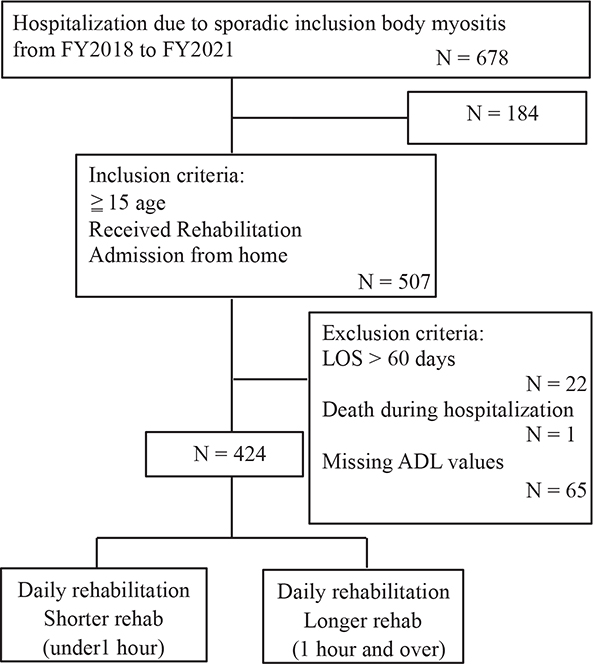
Fig. 1. Participant selection. LOS: length of hospital stay; ADL: activities of daily living; FY: financial year.
Tables I and SI show baseline characteristics and treatment before and after adjusting the IPTW. Before adjusting the IPTW, the 60–75-year age group was the most predominant (n = 201, 47.4%) in the shorter rehabilitation group (n = 129, 48.7%). Similar to the overall proportion in the shorter rehabilitation group, the most common age group was 65–75 years (n = 129, 48.7%), whereas in the longer rehabilitation group, the most common age group was 75 years and over (n = 77, 48.4). After adjusting the IPTW, all covariates were well balanced between the longer and shorter rehabilitation groups (AMD < 10%).
Regarding demographic rehabilitation in the entire patient group, the proportion of patients rehabilitated with a frequency of 6 or more per week was 21.5%, and the proportion of patients undergoing rehabilitation with robotics was 12.3%. Before and after adjusting the IPTW, the longer rehabilitation group underwent more weekly rehabilitation over 5 days and used more robotics than the shorter rehabilitation group. The medications used in over 10% of the entire patient group were opioids (15.3%), anaesthesia (30.9%), acetaminophen (21.2%), non-steroidal anti-inflammatory drugs (16.0%), uricosuric agents (17.7%), hypnotics and sedatives (28.1%), anxiolytics (17.0%), IVIG (35.6%), and glucocorticoids (32.8%), a proportion of patients under went gastrostomy (4.2%).
Table II shows that the daily duration of rehabilitation in the longer rehabilitation group affected outcomes. The longer rehabilitation group had significantly improved performance in ADL compared with the shorter rehabilitation group after adjusting the IPTW (risk ratio [95% confidence interval (28)]: 1.37 [1.06–1.78]). In each ADL item, toileting and mobility were significant improved in the longer rehabilitation group after adjusting the IPTW (toileting: risk ratio [95% CI]: 2.57 [1.66–4.12]); mobility: risk ratio [95% CI]: 2.01 [1.38–3.00]).
Length of hospital stay (LOS) was longer in the longer rehabilitation group than in the shorter rehabilitation group after IPTW adjustment (LOS, n [%], longer rehabilitation vs shorter rehabilitation group: 15.06 [10.23] vs 17.63 days [11.33], AMD = 0.24 (Table SII).
Table III shows the association between daily rehabilitation and other treatments using intermediate variable analysis. The rehabilitation frequency of 6 or more per week showed improved ADL compared with 5 or less after adjusting for daily rehabilitation IPTW in direct (risk ratio [95% CI]: 1.60 [1.21–2.10]) and indirect (risk ratio [95% CI]: 1.32 [1.30–1.34]) effects. The direct effect refers to the effect of a rehabilitation frequency of 6 or more times per week on ADL improvement, independent of any influence from increasing rehabilitation duration per day. Conversely, the indirect effect denotes the joint impact of both a rehabilitation frequency of 6 or more times per week and extended rehabilitation duration per day while excluding the direct influence of rehabilitation frequency. The indirect effect can be regarded as an assessment of synergistic benefits derived from combining these 2 treatments.
A significant difference in ADL improvement was observed between the direct effect of rehabilitation with robotics (risk ratio [95% CI]: 1.39 [1.00–1.94]) and the indirect effect of rehabilitation with robotics together with a longer duration of rehabilitation excluding the direct effect (risk ratio [95% CI]: 0.86 [0.82–0.91]). Anaesthesia medication use also showed a significant difference in ADL improvement in indirect effects (opioid: risk ratio [95% CI]: 0.82 [0.78–0.86]; anaesthesia: risk ratio [95% CI]: 0.82 [0.79–0.86]; acetaminophen: risk ratio [95% CI]: 0.83 [0.79–0.86]). In addition, in IVIG treatment, a significant difference in ADL improvement was observed in both direct (risk ratio [95% CI]: 0.46 [0.33–0.65]) and indirect (risk ratio [95% CI]: 1.03 [0.93–1.09]) effects.
Table IV shows sensitivity analysis for the main analysis when the daily duration of rehabilitation was changed. There was a significant difference in the mean daily duration of rehabilitation ≥ 1.5 and ≥ 2.0 h (≥ 1.5 h: risk ratio [95% CI]: 2.93 [2.43–3.60], 0.40 [0.35–0.46]); ≥ 2.0 h: risk ratio [95% CI]: 3.98 [3.06–5.02]).
DISCUSSION
This study found that a longer daily duration of rehabilitation was associated with improvement in ADL for sIBM during hospitalization. This is the first study to report that a longer rehabilitation duration for inpatients with sIBM results in better outcomes. A strength of this study is that it included 424 patients using the medical database. A previous RCT of resistance training for 22 participants for 12 weeks showed that training did not improve self-reported and objective physical functions, including walking speed, standing balance, or muscle strength. However, the training protocol had a preventive effect on muscle decline, which may aid in the long-term preservation of physical function (12). sIBM has a degenerative pathway; thus, muscle strength decreased by 3.5% and 5.5% annually (29). Therefore, improvement in physical function is difficult to achieve using exercise alone. Many studies have described the effect of exercise (8, 9) as having limitations for ADL improvement. Rehabilitation not only encompasses exercise, but also the use of assistive devices, environmental conditioning, and the acquisition of compensatory movements (30). Rehabilitation can allow patients to achieve their goals with appropriate risk management.
The current study did not determine the type of rehabilitation that is considered effective, and thus it is necessary to verify this in future studies.
When focusing on each ADL item, a longer duration of rehabilitation was associated with improvements in walking and toileting activities. sIBM is characterized by progressive quadriceps muscle and plantar flexor muscle weakness, leading to falls or difficulty standing up (31). However, a previous RCT investigated low-load restricted resistance training performed on 22 patients with sIBM for 12 weeks, and found that this training had a preventive effect on disease-related decline in leg muscle strength (12). The previous study has a limitation, in that its statistical power level was 60–65%. It was possible to underestimate the data analysis. On the other hand, it has been suggested that appropriate exercise may slow the progression of the disease. A previous study, assessing a 16-week home exercise programme for 7 patients with sIBM, found improvements in patients’ muscle hip flexion, knee extension, and grip strength. This study assessed the following muscle training exercises: sit-to-stand exercises and strength training for each muscle selected based on the degree of weakness of proximal muscle groups and functional impairment reported by the patient and observed by the examiner (32). However, the same group of investigators described the effects of an aerobic exercise programme added to the above-mentioned training. They found that this exercise programme improved aerobic capacity and muscle strength without knee extension and grip strength (33). However, these studies had insufficient study populations because sIBM has a low incidence rate. Thus, there was no comparison group, and only pre- and post-training changes were completed for each subject. Therefore, the outcomes of patients with the same background factors as patients with sIBM who did not train for the same amount of time were not determined. In the last study, the quadriceps muscles may have been overloaded during aerobic exercise on a bike. In order to improve ADLs, such as walking and standing up, an appropriate amount of training and environmental setting is considered necessary. The results of this study suggest that rehabilitation interventions may improve ADLs in the short term through appropriately managed exercises.
The group with a longer daily duration of rehabilitation also had a longer mean length of hospital stay. The longer hospital stay may have contributed to the recovery of ADLs, as it allowed for a longer period of rehabilitation. sIBM is a progressive disease, therefore, it is unlikely that a difference of 2–3 days in the mean length of hospital stay in this study contributed to spontaneous recovery (34).
A rehabilitation frequency of 6 or more per week was associated with improvement in ADL. Intermediate variable analysis showed that the effect of longer rehabilitation through the implementation of rehabilitation also contributed to improvement in ADL. This suggests that the rehabilitation effect of ADL improvement in sIBM is dependent not only on longer daily duration of rehabilitation, but also on an increase in the number of implementation days.
Rehabilitation with robotics was associated with improvement in ADL. A previous case report study of rehabilitation with assistant walk robotics for 3 patients, showed that rehabilitation with robotics had a tendency to effect improvement in walking ability (21). However, in this study, robotic rehabilitation with a longer daily duration of rehabilitation decreased the effect on ADL improvement. The gait-assisted robot used for sIBM in Japan requires a lengthy period of preparation, which may have reduced the effects of a longer duration of rehabilitation. Rehabilitation with robotics for patients with sIBM can be effective, but access to the system, especially when considering duration of rehabilitation, should be carefully considered.
Opioids 15.3%, anaesthesia 30.9%, and acetaminophen 21.2% were used by patients in this study. The use of analgesics suggests that patients were in pain, and it may have affected the effectiveness of rehabilitation. The indirect effect on rehabilitation was within the confidence interval and pain may have had little effect on rehabilitation. Based on these results, pain control using pain medications appears to be important for the implementation of rehabilitation in sIBM. IVIG treatment had a negative effect on ADL improvement, but IVIG treatment as an intermediate factor in rehabilitation had no effect on ADL improvement. A previous study randomized 19 patients with sIBM to a double-blind crossover study of IVIG compared with a placebo. Difference in muscle strength was not significant between the IVIG and placebo groups (35). A long-term observational study of a large cohort of patients with sIBM reported that the first stage of disease progression toward walking handicap was more rapid among patients receiving immunosuppressive treatments than among patients not receiving immunosuppressive treatments (36). Most studies assessing IVIG demonstrated that IVIG was not clinically significantly effective (35–37). The current study focused on rehabilitation and selected patients and covariates that were beneficial for the comprehensive assessment of sIBM. Therefore, it was not possible to determine the effectiveness of IVIG in the treatment of sIBM; however, it is possible that IVIG may lower the duration of rehabilitation.
Study limitations
This study has some limitations. First, the medical administrative databases were not traceable, information on the onset of sIBM was not obtained, and the length of time from onset of sIBM to hospitalization was not determined.
Secondly, misclassification of sIBM, which is the disease of interest in this study, is possible. Identification of sIBM was weak, due to a lack of information regarding diagnosis criteria in this database, and no validation study for sIBM was conducted. We subtract the patients with sIBM not only ICD-10 and Japanese diagnosis code but also disease text names to increase the accuracy of identifying diseases from the database. Thirdly, the study data depicted the basic characteristic of social activities, such as work and economic status. Although sIBM is a slowly progressive disease, it is important to determine its effect on social factors. Fourthly, the database used in this study does not include details of rehabilitation, since it is based on claims data. Thus, it was not possible to determine the type of rehabilitation provided to each patient. Further research including detailed rehabilitation information is necessary. Finally, background data, such as the number of falls, use of assistive devices, autoantibody positivity, muscle strength, etc., were not available. Although there were limitations, it is significant that sIBM, with its small number of cases, was analysed in a database representative of Japan.
CONCLUSION
A longer daily duration of rehabilitation improves ADLs for inpatients with sIBM. The results of this study suggest that providing at least 1 h of daily rehabilitation intervention to inpatients with sIBM may lead to improvement in ADLs during hospitalization.
ACKNOWLEDGEMENTS
The authors would like to thank the Tokyo medical and dental university graduate students in the laboratory who helped with the analyses and provided useful advice. We would also like to thank Editage (www.editage.jp) for English-language editing.
This work was supported by a Grant-in-Aid for Research on Policy Planning and Evaluation from the Ministry of Health, Labor and Welfare, Japan (grant number 20AA2003) and a Grant-in-Aid for Young Scientists (B) from the Japan Society for the Promotion of Science (JSPS KAKENHI) (grant number 21K10299). The two foundations did not influence the study’s design, data collection, analysis, interpretation of data, publication of results, or writing of this manuscript.
Availability of data and materials. The datasets supporting the conclusions of this article are available from the corresponding author upon reasonable request.
REFERENCES
- Dimachkie MM, Barohn RJ. Inclusion body myositis. Semin Neurol 2012; 32: 237–245.
- Greenberg SA. Inclusion body myositis: clinical features and pathogenesis. Nat Rev Rheumatol 2019; 15: 257–272.
- Dimachkie MM, Barohn RJ. Inclusion body myositis. Curr Neurol Neurosci Rep 2013; 13: 321.
- Needham M, Mastaglia FL. Inclusion body myositis: current pathogenetic concepts and diagnostic and therapeutic approaches. Lancet Neurol 2007; 6: 620–631.
- Paltiel AD, Ingvarsson E, Lee DK, Leff RL, Nowak RJ, Petschke KD, et al. Demographic and clinical features of inclusion body myositis in North America. Muscle Nerve 2015; 52: 527–533.
- Naddaf E, Barohn RJ, Dimachkie MM. Inclusion body myositis: update on pathogenesis and treatment. Neurotherapeutics 2018; 15: 995–1005.
- Breithaupt M, Schmidt J. Update on treatment of inclusion body myositis. Curr Rheumatol Rep 2013; 15: 329.
- Alexanderson H. Exercise in myositis. Curr Treatm Opt Rheumatol 2018; 4: 289–298.
- Alexanderson H. Exercise in inflammatory myopathies, including inclusion body myositis. Curr Rheumatol Rep 2012; 14: 244–251.
- Jeong JH, Yang DS, Koo JH, Hwang DJ, Cho JY, Kang EB. Effect of resistance exercise on muscle metabolism and autophagy in sIBM. Med Sci Sports Exerc 2017; 49: 1562–1571.
- Mohannak N, Pattison G, Hird K, Needham M. Dysphagia in patients with sporadic inclusion body myositis: management challenges. Int J Gen Med 2019; 12: 465–474.
- Jorgensen AN, Aagaard P, Frandsen U, Boyle E, Diederichsen LP. Blood-flow restricted resistance training in patients with sporadic inclusion body myositis: a randomized controlled trial. Scand J Rheumatol 2018; 47: 400–409.
- Van Thillo A, Vulsteke JB, Van Assche D, Verschueren P, De Langhe E. Physical therapy in adult inflammatory myopathy patients: a systematic review. Clin Rheumatol 2019; 38: 2039–2051.
- Alexanderson H, Bostrom C. Exercise therapy in patients with idiopathic inflammatory myopathies and systemic lupus erythematosus – a systematic literature review. Best Pract Res Clin Rheumatol 2020; 34: 101547.
- Hayashida K, Murakami G, Matsuda S, Fushimi K. History and profile of diagnosis procedure combination (DPC): development of a real data collection system for acute inpatient care in Japan. J Epidemiol 2021; 31: 1–11.
- Shinya M, Kenji F, Kiyohide F. Development of casemix based evaluation system in Japan. Asian Pacific J Dis Manag 2010; 4: 55–66.
- Yasunaga H. Real world data in Japan: chapter II the diagnosis procedure combination database. Ann Clin Epidemiol 2019; 1: 76–79.
- Wade DT, Collin C. The Barthel ADL Index: a standard measure of physical disability? Int Disabil Stud 1988; 10: 64–67.
- Consultation WHOE. Appropriate body-mass index for Asian populations and its implications for policy and intervention strategies. Lancet 2004; 363: 157–163.
- Quan H, Sundararajan V, Halfon P, Fong A, Burnand B, Luthi JC, et al. Coding algorithms for defining comorbidities in ICD-9-CM and ICD-10 administrative data. Med Care 2005; 43: 1130–1139.
- Suzuki N, Soga T, Izumi R, Toyoshima M, Shibasaki M, Sato I, et al. Hybrid Assistive Limb(R) for sporadic inclusion body myositis: a case series. J Clin Neurosci 2020; 81: 92–94.
- Chesnaye NC, Stel VS, Tripepi G, Dekker FW, Fu EL, Zoccali C, et al. An introduction to inverse probability of treatment weighting in observational research. Clin Kidney J. 2022;15(1): 14–20.
- Austin PC. An introduction to propensity score methods for reducing the effects of confounding in observational studies. Multivariate Behav Res 2011; 46: 399–424.
- Naimi AI, Whitcomb BW. Estimating risk ratios and risk differences using regression. Am J Epidemiol 2020; 189: 508–510.
- Richiardi L, Bellocco R, Zugna D. Mediation analysis in epidemiology: methods, interpretation and bias. Int J Epidemiol 2013; 42: 1511–1519.
- Eba J, Nakamura K. Overview of the ethical guidelines for medical and biological research involving human subjects in Japan. Jpn J Clin Oncol 2022 31; 52(6): 539–544.
- Tingley D, Yamamoto T, Hirose K, Keele L, Imai K. Mediation: R Package for causal mediation analysis. J Statist Software 2014; 59: 1–38.
- Winstein CJ, Stein J, Arena R, Bates B, Cherney LR, Cramer SC, et al. Guidelines for adult stroke rehabilitation and recovery: a guideline for healthcare professionals from the American Heart Association/American Stroke Association. Stroke 2016; 47: e98–e169.
- Cox FM, Titulaer MJ, Sont JK, Wintzen AR, Verschuuren JJ, Badrising UA. A 12-year follow-up in sporadic inclusion body myositis: an end stage with major disabilities. Brain 2011; 134: 3167–3175.
- Carter GT. Rehabilitation management in neuromuscular disease. J Neurol Rehabil 1997; 11: 69–80.
- Amato AA, Gronseth GS, Jackson CE, Wolfe GI, Katz JS, Bryan WW, et al. Inclusion body myositis: clinical and pathological boundaries. Ann Neurol 1996; 40: 581–586.
- Johnson LG, Edwards DJ, Walters S, Thickbroom GW, Mastaglia FL. The effectiveness of an individualized, home-based functional exercise program for patients with sporadic inclusion body myositis. J Clin Neuromuscul Dis 2007; 8: 187–194.
- Johnson LG, Collier KE, Edwards DJ, Philippe DL, Eastwood PR, Walters SE, et al. Improvement in aerobic capacity after an exercise program in sporadic inclusion body myositis. J Clin Neuromuscul Dis 2009; 10: 178–184.
- Needham M, Mastaglia FL. Inclusion body myositis: current pathogenetic concepts and diagnostic and therapeutic approaches. Lancet Neurol 2007; 6: 620–631.
- Dalakas MC, Sonies B, Dambrosia J, Sekul E, Cupler E, Sivakumar K. Treatment of inclusion-body myositis with IVIg: a double-blind, placebo-controlled study. Neurology 1997; 48: 712–716.
- Benveniste O, Guiguet M, Freebody J, Dubourg O, Squier W, Maisonobe T, et al. Long-term observational study of sporadic inclusion body myositis. Brain 2011; 134: 3176–3184.
- Dalakas MC, Koffman B, Fujii M, Spector S, Sivakumar K, Cupler E. A controlled study of intravenous immunoglobulin combined with prednisone in the treatment of IBM. Neurology 2001; 56: 323–327.