ORIGINAL REPORT
END-OF-LIFE DECISIONS AND INVOLVEMENT OF PHYSICAL AND REHABILITATION MEDICINE PHYSICIANS IN EUROPE
Rutger OSTERTHUN, MD, PhD 1, Katharina S. SUNNERHAGEN, MD, PhD2, Henk J. STAM, MD, PhD3 and Carlotte KIEKENS, MD4
From the 1Rijndam Rehabilitation Center, and Department of Rehabilitation Medicine, Erasmus MC, University Medical Center Rotterdam, Rotterdam, The Netherlands, 2Institute of Neuroscience and Physiology, Rehabilitation Medicine, Sahlgrenska Academy, University of Gothenburg, and the Sahlgrenska University Hospital, Gothenburg, Sweden, 3Department of Rehabilitation Medicine, Erasmus MC, University Medical Center Rotterdam, The Netherlands and 4IRCCS Istituto Ortopedico Galeazzi, Milan, Italy.
Objective: As Physical and Rehabilitation Medicine physicians are experts in functional prognoses of disabling health conditions, the aim of this study was to gain insight into their involvement in end-of-life decisions in patients with neurological or terminal diseases in European countries.
Design: Exploratory cross-sectional survey.
Subjects: Delegates of the Union of European Medical Specialists, Physical and Rehabilitation Medicine Section.
Methods: In July 2020, a self-constructed survey was sent to 82 delegates from 38 European countries, who were asked to answer from the point of view of their country. Topics included the legal status of end-of-life decisions and the involvement of Physical and Rehabilitation Medicine physicians in these decisions.
Results: Between July 2020 and December 2020, 32 delegates from 28 countries completed the survey (response rate country level of 74%). If legal frameworks allow for these specific end-of-life decisions, involvement of Physical and Rehabilitation Medicine physicians was reported in 2 of 3 countries in euthanasia cases, 10 of 17 countries in non-treatment decision cases, and 13 of 16 countries in cases of intensified symptom management by the administration of drugs using potentially life-shortening doses.
Conclusion: Estimated involvement of Physical and Rehabilitation Medicine physicians in end-of-life decisions varied between European countries, even when legal frameworks allow for these decisions.
LAY ABSTRACT
End-of-life considerations may arise after severe disabling health conditions and lead to end-of-life decisions. As Physical and Rehabilitation Medicine physicians are experts in functional prognosis for patients with these health conditions, their expertise could be of value to consider in these decisions.
Legal frameworks and attitudes towards end-of-life decisions differ between European countries. However, there is a lack of information on the involvement of Physical and Rehabilitation Medicine physicians in these decisions. Therefore, delegates of Physical and Rehabilitation Medicine physicians in European countries were surveyed on the legal status of end-of-life decisions and the involvement of Physical and Rehabilitation Medicine physicians. The responses of delegates from 28 countries suggested differences in involvement of Physical and Rehabilitation Medicine physicians in end-of-life decisions between European countries, even between countries with a legal status of these end-of-life decisions. In the light of the ageing population and a general tendency toward more liberal attitudes concerning end-of-life decisions in Europe, these findings could be of interest in order to optimize end-of-life care in the coming years.
Key words: central nervous system diseases; euthanasia; neurodegenerative diseases; persistent vegetative state; physical and rehabilitation medicine; spinal cord injuries; stroke; suicide, assisted; right to die.
Citation: J Rehabil Med 2023; 55: jrm5575. DOI: https://doi.org/10.2340/jrm.v55.5575
Copyright: © Published by Medical Journals Sweden, on behalf of the Foundation for Rehabilitation Information. This is an Open Access article distributed under the terms of the Creative Commons Attribution-NonCommercial 4.0 International License (https://creativecommons.org/licenses/by-nc/4.0/)
Accepted: Apr 5, 2023; Published: Jun 30, 2023
Correspondence address: Rutger Osterthun, Department of Rehabilitation Medicine, Erasmus MC, University Medical Center Rotterdam, PO Box 2040, NL-3000 CA, Rotterdam, The Netherlands. E-mail: rosterthun@rijndam.nl
Competing interests and funding: The authors have no conflicts of interest to declare.
At first glance, end-of-life decisions (ELDs) might appear to be contradictory to rehabilitation and its goals. The World Health Organization (WHO) defines rehabilitation as a set of interventions designed to optimize functioning and reduce disability in individuals with health conditions in interaction with their environment (1). Physical and Rehabilitation Medicine (PRM) is an independent primary medical specialty with a person- and functioning-focus (contrary to the organ- and disease-oriented specialties or specialties that focus on specific age groups or prevention), which is present in almost all European countries (2–4). PRM physicians treat health conditions and impairments of physical, psychological and cognitive functions, as well as activity limitations, aiming to improve their patients’ participation and quality of life (QoL). These health conditions include acute diseases or injuries, such as stroke, traumatic brain injury (TBI) or spinal cord injury (SCI), and progressive diseases, such as multiple sclerosis (MS), Parkinson’s disease, or amyotrophic lateral sclerosis (ALS) (2, 5). These diseases may result in severe impairments, activity limitations, participation restrictions and health issues, such as spasticity, pain, and communication disorders (4, 5).
In Europe, PRM care is generally organized with a multi-professional team working in an interdisciplinary manner (2–4). PRM physicians are responsible for functional assessment, rehabilitation practice, and primary and secondary prevention in the acute (hospital), post-acute (rehabilitation), and chronic phases (2–6). However, the organization and expertise of PRM care varies between and within European countries. Depending on the health condition and its phase, PRM physicians may be responsible for overall care of a patient in a hospital or clinic setting, or may be involved in care as an external specialist to provide specialist advice (2–5).
Although the main focus of PRM is supporting patients after severe health conditions to improve functioning, participation and QoL, end-of-life considerations may arise in certain cases in any phase after an injury or the onset of a disease. Examples are severe cases of acute brain injury without perspective on sufficient QoL or advancing progressive diseases leading to hopeless suffering that cannot be alleviated. These considerations on life and death may finally lead to ELDs (7–12). ELDs can be defined as all decisions made by a physician, either with the intention of shortening the patient’s life, or knowing that the decision may have a potentially life-shortening effect (13).
ELDs are complex, controversial, and subject to an ongoing debate (14, 15). Different types of ELDs can be distinguished, and various classifications are described. For this study, we adopted the definitions of ELDs as shown in Table I for euthanasia, physician-assisted suicide (PAS), non-treatment decisions (NTD), and intensified pain and/or other symptom management by the administration of drugs using potentially life-shortening doses (ISPM) (13, 14).
| Euthanasia: a doctor intentionally killing a person by the administration of drugs, at that person’s voluntary and competent request. Physician-assisted suicide (PAS): a doctor intentionally helping a person to commit suicide by providing drugs for self-administration, at that person’s voluntary and competent request. Non-treatment decisions (NTD): decisions to withhold or withdraw potentially life-sustaining treatment. Intensified pain and/or other symptom management by the administration of drugs using potentially life-shortening doses (ISPM). |
| Note: palliative care is not an end-of-life decision as it intends to neither hasten nor postpone death (25). |
The most controversial ELDs are generally most strictly regulated by law. Euthanasia and PAS, including advance care planning related to these ELDs, are allowed in some countries under strict regulations (8, 16–18).
PAS should further be distinguished from assisted suicide (AS). Switzerland for example, has a liberal legislation on AS. Although associations that offer AS in Switzerland cooperate with physicians, the AS offered is not assisted by a physician (19, 20).
Advance care planning related to NTD and ISPM is legally possible in several European countries (21, 22). NTD, decisions to withhold or withdraw treatment, are further common in European intensive care units after severe injuries (23). ISPM, also referred to as shortening of the dying process, should be distinguished from palliative care and palliative sedation. Although there is a grey area between ISPM and palliative care (24), palliative care is not an ELD, as it intends to neither hasten nor postpone death (25). Palliative sedation is an accepted, ethical practice when used in the appropriate situation. Palliative sedation is considered an important and necessary approach in the care of selected palliative care patients with otherwise refractory distress (26). However, this approach requires attention to proportionality and good clinical practice and attention to potential risks and problematic practices that can lead to harmful and unethical practices (26).
Besides legal frameworks, practices of ELDs depend on attitudes towards ELDs, which vary between European countries and regions (27), and between individuals within these regions. Attitudes towards ELDs are determined by various factors, including culture, religion and resources on a societal level and the prognosis of functioning and QoL on an individual level (16, 27–29).
If legal frameworks allow for ELDs, ultimate carefulness is required for decisions concerning life and death. Although death is generally an uncomfortable and difficult subject to discuss, autonomy and informed consent should be ensured (21, 30, 31). For medical professionals this includes facilitating optimal conditions for communication, assessing the patients’ values and priorities, and providing adequate information on prognoses of functioning and QoL. Furthermore, this may also include (providing information on) advance care planning. In case of persons with severe disabling health conditions, discussing end-of-life considerations may be complicated by communication or cognitive disorders. In addition, facilitating autonomy and coming to an informed decision may require specific knowledge and more effort from medical professionals in these cases, not only for dignity in end-of-life care, but also to prevent premature ELDs.
Several developments in the last decades stress the importance of well-developed policies on this subject. Progress in healthcare and knowledge of health have contributed to a considerable increase in the proportion of elderly people in the general population. In line with this, there is a higher incidence of neurological conditions in elderly people, more persons with severe neurological conditions survive the acute phase, and more people are ageing with (severe) neurological conditions. These demographic changes may increase the number of requests for ELDs in people with such conditions.
Although European healthcare is generally well organized, there is variation in practices between countries and even within countries concerning ELDs, based on, for example, legal frameworks, culture and religion. Considering the core competencies of PRM physicians to treat consequences and to establish prognoses of functioning and QoL of persons with disabling health conditions, these medical specialists could play an essential role in well-informed decisions on life and death concerning people with these conditions.
As the actual involvement of PRM physicians in ELDs in Europe is unknown, this explorative study aimed to gain insight into this involvement in European countries in patients with neurological or terminal diseases. The study hypotheses are that the involvement of PRM physicians on a country level would be limited to countries with a legal status for those specific ELDs, and that involvement would vary between countries, even in the case of comparable legal frameworks on ELDs.
METHODS
In July 2020, a self-constructed digital survey was sent by email to 82 delegates of 38 countries of the Union of European Medical Specialists, Physical and Rehabilitation Medicine (UEMS PRM) Section (32). The UEMS PRM Section is the representative body of PRM medical specialists in Europe concerned with rehabilitation medical specialist training, continuing medical education, medical specialty practice autonomy, and other aspects of professional practice.
Delegates of the UEMS PRM Section were approached as they represent the PRM society of their country. As such, they were asked to answer the survey from the point of view of their country. Delegates were informed that completion of the survey by 1 respondent per country was required to participate in the study, although completion by more than 1 respondent per country was allowed. In case of difficulties answering certain topics, the respondents were asked to discuss these topics with PRM colleagues from their country.
The survey instructions further included information on the general definition of ELDs, definitions of the 4 ELDs set out in Table I, and the definition of palliative care. Respondents were asked to contact the authors if further explanation was required.
The survey was provided in English and structured according to the following topics:
- General role of PRM physicians in the acute (hospital) and post-acute (rehabilitation) phase (physician responsible for overall care of a patient in hospital or clinic setting, external specialist to provide specialist advice; more answers possible) for stable and progressive neurological diseases. This part comprised 4 questions.
- Legal status of 4 ELDs (euthanasia, PAS, NTD and ISPM), defined as described in Table I. This part comprised 4 questions.
- Involvement of PRM physicians in cases of ELDs in different phases (acute (hospital), post-acute (rehabilitation), chronic) and in different diagnoses (progressive neurological diseases, such as MS or ALS, stable neurological diseases, such as SCI or TBI, terminal diseases, such as cancer, and unresponsive wakefulness syndrome (UWS), such as persistent vegetative state (PVS) or minimally conscious state (MCS), including their involvement in these ELDs (physician responsible for overall care of a patient in hospital or clinic setting, external specialist to provide specialist advice; more answers possible). This part comprised 8 main questions and 16 sub-questions.
The constructed digital survey was tested by the authors to appraise its content and feasibility. In case of multiple responses from 1 country and conflicting results, the delegates of the country concerned were approached to clarify answers and reach a consensus. Furthermore, delegates were approached to clarify unclear or remarkable answers.
Finally, the survey results were discussed in virtual meetings of the UEMS PRM Section in March 2021 and March 2022, and in the European Academy of Rehabilitation Medicine (EARM) meeting in June 2022 in Nancy, France.
Analyses
Maps of Europe were created by MapChart version 3.7.3 (https://www.mapchart.net/) to display the distribution of the response at the country and European level, and to display the legal status of ELDs in countries according to the survey. A division of Europe provided by the United Nations Statistic Division (UNSD) was used (33). In this division, which is for statistical convenience, Europe is divided into 4 subregions; Northern Europe, Eastern Europe, Western Europe, and Southern Europe.
Descriptive narrative analyses were performed to describe the involvement of PRM physicians in ELDs in different health conditions and different phases.
Subanalyses were performed to gain insight into the involvement of PRM physicians in NTD and ISPM in subregions of Europe. For each subregion, the number of countries without declared involvement of PRM physicians in ELDs, even though these ELDs were legal in that country, was calculated.
RESULTS
Between July 2020 and December 2020, 32 delegates of the UEMS PRM Section from 28 countries completed the survey. The response rate at country level was 28/38 (74%). Participating countries were Finland, Ireland, Latvia, Norway and the UK (Northern Europe; response rate 5/10); Bulgaria, Czech Republic, Hungary, Poland, Romania, Russia, Slovakia, Ukraine (Eastern Europe; response rate 8/8); Austria, Belgium, France, Germany, Luxembourg, the Netherlands, Switzerland (Western Europe; response rate 7/7); Croatia, Greece, Italy, Slovenia, Spain (Southern Europe; response rate 5/9) and Cyprus, Israel, Turkey (Western Asia; response rate 3/4). An overview of participating countries is shown in Fig. 1.
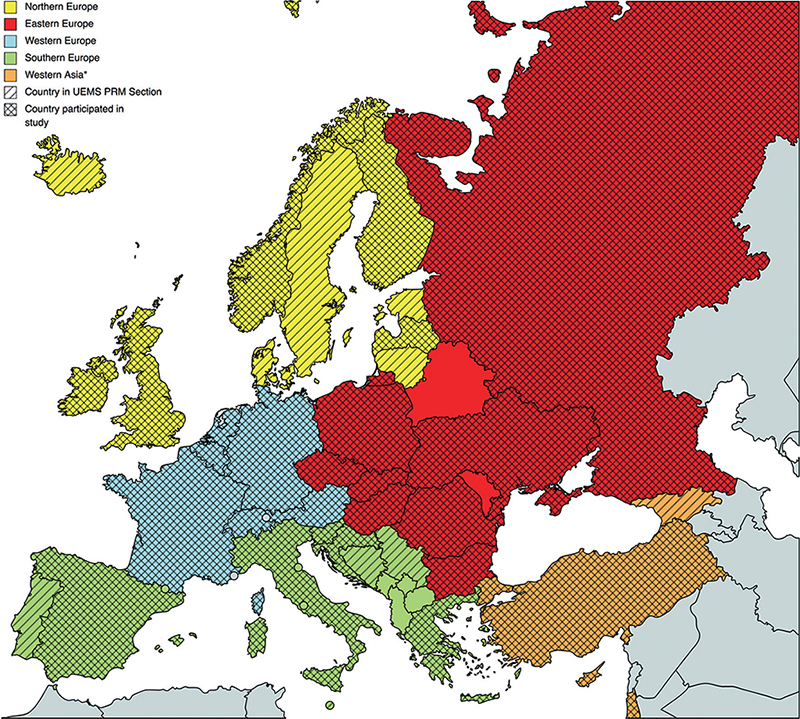
Fig. 1. Participation of countries represented in the Union of European Medical Specialists, Physical and Rehabilitation Medicine (UEMS PRM) Section in subregions of Europe according to the United Nations Statistics Division (UNSD) (23).
*Cyprus, Georgia, Israel and Turkey are part of Western Asia according to the UNSD.
There were 4 countries that had 2 respondents. In 2 of these countries, there were conflicting answers between respondents. In 1 country, this concerned the legal status of 2 ELDs. PAS was marked illegal and ISPM legal by 1 person, while the other persons answered “other” and included refinement of the legal status of the ELDs. In the other country, this concerned involvement of PRM physicians in general care and in ELDs. After contacting delegates of these countries, consensus was achieved on these answers.
General role of the Physical and Rehabilitation Medicine physician
The results regarding the general role of PRM physicians in the acute and post-acute phases after progressive and stable neurological diseases are shown in Table II. PRM physicians were involved in the acute and post-acute care in these conditions in most participating countries. In the acute phase this was mostly as external specialist to provide specialist advice and, in some countries, as responsible for overall care. In the post-acute phase involvement of PRM physicians mostly concerned responsibility for overall care, but also frequently involvement as an external specialist to provide specialist advice.
| *General care (N = 28 countries) | Euthanasia (Legal status in responding countries: legal/illegal/other 3/25/0) | Physician-assisted suicide (Legal status: legal/illegal/other 0/25/3) | Non-treatment decisions (Legal status: legal/illegal/other 17/7/4) | Potentially life-shortening drugs (Legal status: legal/illegal/other 16/9/3) | ||||||
| Progressive neurological diseases | ||||||||||
| Involvement acute phase | 26 | 2 | 0 | 8 | 7 | |||||
| Role “responsible overall care” | 7 | 0 | NA | 3 | 3 | |||||
| Role “external specialist” | 26 | 2 | NA | 7 | 6 | |||||
| Involvement post-acute phase | 27 | 2 | 0 | 10 | 7 | |||||
| Role “responsible overall care” | 19 | 1 | NA | 6 | 4 | |||||
| Role “external specialist” | 14 | 2 | NA | 7 | 6 | |||||
| Involvement chronic phase | 2 | 1 | 8 | 8 | ||||||
| Role “responsible overall care” | 1 | 0 | 5 | 5 | ||||||
| Role “external specialist” | 2 | 1 | 7 | 6 | ||||||
| Stable neurological diseases | ||||||||||
| Involvement acute phase | 26 | 2 | 0 | 8 | 7 | |||||
| Role “responsible overall care” | 6 | 0 | NA | 2 | 2 | |||||
| Role “external specialist” | 25 | 2 | NA | 7 | 6 | |||||
| Involvement post-acute phase | 27 | 2 | 0 | 11 | 9 | |||||
| Role “responsible overall care” | 18 | 1 | NA | 7 | 5 | |||||
| Role “external specialist” | 17 | 2 | NA | 8 | 8 | |||||
| Involvement chronic phase | 2 | 0 | 10 | 10 | ||||||
| Role “responsible overall care” | 1 | NA | 5 | 5 | ||||||
| Role “external specialist” | 2 | NA | 8 | 7 | ||||||
| Terminal diseases | ||||||||||
| Involvement | 1 | 0 | 3 | 3 | ||||||
| Role “responsible overall care” | 0 | NA | 2 | 2 | ||||||
| Role “external specialist” | 1 | NA | 3 | 3 | ||||||
| Unresponsive wakefulness syndromes | ||||||||||
| Involvement | 0 | 0 | 10 | 10 | ||||||
| Role “responsible overall care” | NA | NA | 7 | 7 | ||||||
| Role “external specialist” | NA | NA | 8 | 9 | ||||||
| *Involvement in general care was only asked for the acute and post-acute phase for progressive and stable neurological diseases. | ||||||||||
| NA: not applicable. | ||||||||||
Legal status of end-of-life decisions
The reported legal status of ELDs is shown in Fig. 2. Respondents indicated that euthanasia was legal in 3 of the 28 participating countries, namely Belgium, Luxembourg and the Netherlands. PAS was less straightforward to answer, as respondents from the same 3 countries entered “other”. NTD were marked legal in 17 countries and illegal in 7 countries. In 4 countries, the answer was “other”, including the comments “the decision is the patient’s responsibility (no physician assistance)” and “if approved by the public notary beforehand”. ISPM was marked “legal” in 16 countries and “illegal” in 9 countries. In 3 countries, the answer was “other”, including the following comments: “regulations are unclear” and “case by case decision”. In 8 countries, the legal status of NTD differed from the legal status of ISPM.
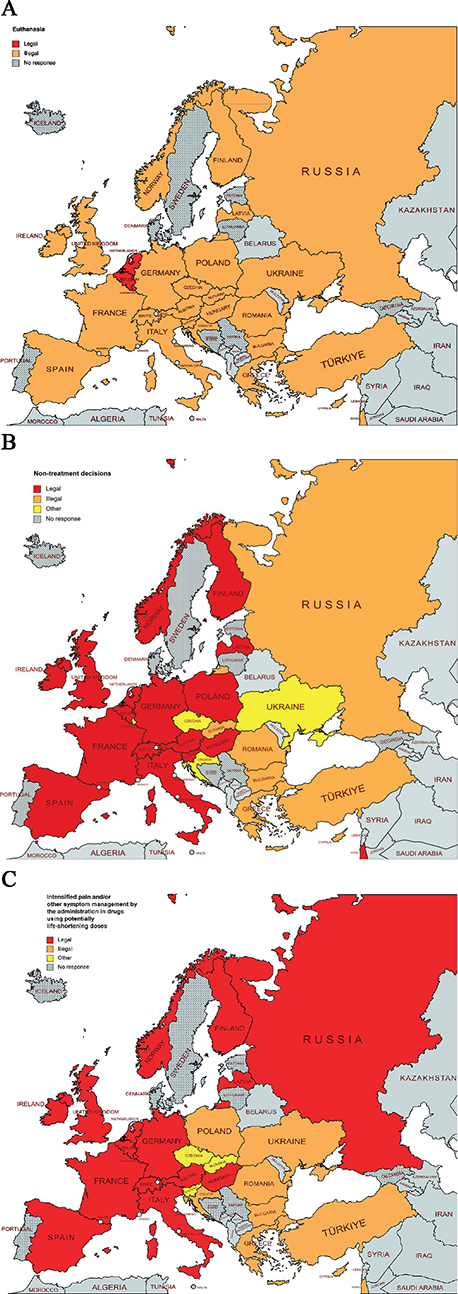
Fig. 2. Legal status in participating countries of (A) euthanasia, (B) non-treatment decisions (NTD), (C) and intensified pain and/or other symptom management by the administration of drugs using potentially life-shortening doses (ISPM). (Physician-assisted suicide is not depicted).
A subanalysis of subregions of Europe showed that NTD and ISPM are more frequently legal in the responding countries from the Northern or Western part of Europe compared with the Southern and Eastern parts of Europe (Tables III and IV).
| Participating countries (N = 28) | Illegal (n = 7) | Legal (n = 17) | Other (n = 4) | ||
| PRM physician involved** (n = 10) | PRM physician not involved (n = 7) | ||||
| Northern Europe | 5 | 0 | 3 | 2 | 0 |
| Eastern Europe | 8 | 4 | 0 | 2 | 2 |
| Western Europe | 7 | 0 | 5 | 1 | 1 |
| Southern Europe | 5 | 1 | 1 | 2 | 1 |
| Western Asia* | 3 | 2 | 1 | 0 | 0 |
| *Cyprus, Israel and Turkey are part of Western Asia according to the UNSD. | |||||
| **Countries with involvement of PRM physicians in any NTD regardless of disease and phase. | |||||
| Participating countries (N = 28) | Illegal (n = 9) | Legal (n = 16) | Other (n = 3) | ||
| PRM physician involved** (n = 13) | PRM physician not involved (n = 3) | ||||
| Northern Europe | 5 | 0 | 4 | 1 | 0 |
| Eastern Europe | 8 | 4 | 1 | 1 | 2 |
| Western Europe | 7 | 0 | 6 | 1 | 0 |
| Southern Europe | 5 | 2 | 2 | 0 | 1 |
| Western Asia* | 3 | 3 | 0 | 0 | 0 |
| *Cyprus, Israel and Turkey are part of Western Asia according to the UNSD. | |||||
| **Countries with involvement of ISPM regardless of disease and phase. | |||||
| ISPM: intensified pain and/or other symptom management by the administration of drugs using potentially life-shortening doses. | |||||
Involvement of Physical and Rehabilitation Medicine physicians in end-of-life decisions
The responses regarding involvement of PRM physicians in ELDs are shown in Table II. Based on the survey, PRM physicians were only involved in ELDs in countries if the specific ELD was legal in that country, except for involvement in cases of euthanasia and PAS in 1 country and in NTD in another country. There were no apparent differences in involvement in ELDs between progressive neurological disease, stable neurological disease and UWS. Involvement in ELDs in terminal diseases was considerably lower.
The respondents indicated that PRM physicians were involved in euthanasia cases in 2 of 3 countries that had a legal status for euthanasia. In Belgium, PRM physicians were involved in euthanasia as responsible for overall care or as an external specialist to provide specialist advice. In the Netherlands, PRM physicians were involved only to provide specialist advice, and in Luxembourg they were not involved. Involvement of PRM physicians was also reported in euthanasia cases in terminal disease as an external specialist to provide specialist advice in another country without a legal status for euthanasia.
Concerning PAS, PRM physicians were involved in only 1 country; in the chronic phase of progressive neurological disease, as an external specialist to provide specialist advice. This was a country without a legal status for PAS.
Involvement of PRM physicians was reported in cases of NTD and ISPM for stable neurological disease, progressive neurological disease and UWS in more than half of the countries with a legal status for these ELDs. If physicians were involved, this was most frequently in a role as external specialist, but also as responsible for overall care. In countries with a legal status for NTD or ISPM, there was no involvement of PRM physicians in 7 of 17 and 3 of 16 countries, respectively. There was 1 country with involvement of PRM physicians only in ISPM, although both NTD and ISPM had a legal status.
Subanalyses showed that, in each subregion of Europe, there were countries without involvement of PRM physicians in ELDs, although these ELDs were legal in that country (Tables III and IV). For NTD, this was 2 of 5 responding countries in Northern Europe, 2 of 2 responding countries in Eastern Europe, 1 of 6 countries in Western Europe, and 1 of 2 in Southern Europe. For ISPM, this was 1 of 5 in Northern Europe, 1 of 2 responding countries in Eastern Europe, 1 of 7 countries in Western Europe, and 0 of 2 responding countries in Southern Europe.
Discussion of survey results in UEMS PRM section and EARM meetings
In the meetings, the importance of the topic of ELDs and involvement of PRM physicians was acknowledged. General issues that were discussed included the sensitive nature and the complexity of the subject, which may have complicated filling in the survey. Furthermore, feedback was provided on the interpretation of the results. Concerning the legal status of ELDs, this included unclear regulations in some countries and ELDs that occur in a grey area and/or “behind closed doors”. Concerning ELDs in patients who are treated within a PRM setting, (burdensome) cases were described, including unmet needs of patients regarding ELDs and referral to clinics in other countries that offer AS. Also, the importance of advanced care planning was noted in cases of, for example, progressive neurological diseases.
DISCUSSION
To our knowledge, this is the first study to explore PRM physicians’ involvement in ELDs across European countries. As experts on the consequences of diseases and prognosis of functioning and QoL (3–5), PRM physicians and their team may be crucial in these cases concerning decisions regarding life and death. In summary, the current survey showed that PRM physicians are involved in the acute and post-acute care in stable and progressive neurological diseases in most of the 28 participating countries, either as the physician responsible for overall care in the hospital or clinic setting, or as an external specialist to provide specialist advice. According to the survey, ELDs occur in most European countries. Respondents indicated that NTD and ISPM are legal in most European countries, although differences exist between subregions of Europe. Except for PAS, involvement of PRM physicians in ELDs was reported in most countries with a legal status for those ELDs. However, there were differences between countries and subregions of Europe.
Legal status of end-of-life decisions and involvement of Physical and Rehabilitation Medicine physicians in end-of-life decisions
Euthanasia and PAS, also referred to as assisted dying, are the most controversial ELDs. Any request for euthanasia or PAS is complex and may include personal, demographic, psychological, spiritual, social, cultural and economic considerations (14, 15). A legal status for euthanasia was reported in 3 countries where strict regulations exist for a legal exception for homicide (16). The legal status of PAS was not straightforward to answer in these countries, which could imply that the definition of PAS used in the current study may not have been sufficiently detailed to fit the complex and extensive legislations regarding PAS, or that the legal frameworks could be unclear for the participating PRM physicians.
The involvement of PRM physicians in euthanasia cases differed between the 3 countries with a legal status. Belgian PRM physicians can be responsible for performing euthanasia in a hospital or clinic setting, although this is uncommon (8). Differences between countries in the role of PRM physicians in euthanasia cases may be attributed to differences in the role of PRM physicians in the healthcare system. The involvement of PRM physicians in PAS or euthanasia cases does not imply anything about the frequency of these situations. The involvement in these ELDs in 1 country without a legal status for these ELDs may reflect an unmet need for end-of-life care.
Unmet needs concerning end-of-life care were also mentioned in the discussion of the current survey results during the UEMS PRM Section and EARM meetings. This included the situation of referring a patient abroad for end-of-life care. Switzerland, in which PAS is illegal, is known for associations, such as Dignitas, that arrange AS (19). The Dignitas organization website states that Dignitas aims to ensure a life and death with dignity for its members and allow other people to benefit from these values. Amongst counselling and suicide attempt prevention, Dignitas can arrange, on reasoned request and medical proof, the possibility of an accompanied suicide in case of an illness which will lead inevitably to death, unendurable pain or an unendurable disability. Although this association cooperates with physicians, the AS offered is not assisted by a physician (19). Dignitas has an increasing number of members from a variety of countries (19), which may also suggest an unmet need for support in end-of-life considerations and decisions.
A legal status for NTD and ISPM was reported in most of the participating countries. The current survey showed comparable involvement of PRM physicians in NTD and ISPM for progressive neurological diseases, stable neurological diseases and UWS.
The distinction between ISPM and palliative care was stressed in the survey instructions. However, the grey area between relieving suffering and hastening death may have complicated answering questions on this topic. This could have resulted in over-reporting of involvement of PRM physicians in these ELDs.
The division of Europe by the UNSD used in this study does not imply any assumption regarding political or other affiliation of countries or territories (33). Especially for analysing the topic of ELDs, this division into subregions may have significant limitations. Taking these limitations into account, the subanalyses of the estimations of the respondents showed some similarities and differences between regions. In all subregions, there were countries in which ELDs had a legal status, but PRM physicians were not involved. Differences were observed between Northern and Western Europe, on the one hand, and Eastern and Southern Europe, on the other hand, concerning the legal status of ELDs as well as the involvement of PRM physicians in case of a legal status. In general, ELDs more frequently had a legal status in Northern and Western European countries. Furthermore, there was a reported involvement of PRM physicians in ELDs in relatively more Northern and Western European countries with a legal status for an ELD than in Eastern and Southern European countries. These differences between regions may be partially attributed to differences in culture or religion (28, 34), which were not assessed in the current study. Furthermore, in some countries, the (consideration of) involvement of PRM physicians and their team in end-of-life care is anchored in guidelines for specific diagnoses (35), which should lead to more involvement. However, this aspect was not specifically addressed during this exploratory study.
In general, legal frameworks and attitudes towards ELDs in Europe are changing in favour of more liberal approaches (16, 23, 26). For example, concerning legal frameworks, 1 court in Italy recently approved AS for a patient, and, since the end of 2021, end-of-life assistance is no longer punishable in Austria.
Implications
The results of this exploratory study suggest there is a variation in involvement of PRM physicians in ELDs after severe neurological conditions or terminal disease, even if legal frameworks allow for these decisions. Although there was involvement of PRM physicians in several countries, there can still be large differences between regions, organizations or individuals in a country.
Considering their core competencies, it is important to consider involvement of PRM physicians and their team before and in end-of-life care of people with (severe) disabling health conditions. These people should be offered all possible strategies to optimize autonomy and QoL, including treatment of consequences of diseases, such as pain, and the provision of assistive devices, environmental adaptations and assistance. Furthermore, together with a multidisciplinary team, PRM physicians can play an important role in end-of-life considerations by informing patients about their functional prognosis and evaluating possible strategies, including advance care planning.
Study limitations
Although most European countries participated in the study, some countries are not represented in the UEMS PRM Section, and the study did not receive a response from all represented countries. Response rates were lower for Northern and Southern Europe, which may have led to a bias. The appreciation of the legal frameworks of ELDs was questioned by a survey; law itself and jurisdiction were not studied. Only 82 PRM physicians out of these 38 countries were questioned, which were all delegates of the UEMS PRM Section. Although this section has no point of view on this topic, this recruitment of only delegates of UEMS PRM also creates a potential risk for bias.
The survey used in this study was self-constructed with limited validity evaluation. Besides general issues with interpretation in surveys, several specific issues should be addressed concerning interpreting the study results. First, the study focused on the appreciation of 1 or a few PRM physicians of the involvement of PRM physicians in their country in ELDs. This involvement does not provide information on the frequency of ELDs, the frequency of involvement of PRM physicians, or their specific role in ELDs. It also does not provide information on satisfaction concerning ELDs on the part of patients, their families and healthcare providers. Secondly, although definitions of ELDs were specified in the survey, interpretation of these definitions and the regulations of these ELDs may be difficult. This is reflected by the use of the answer option “other” (3 times for PAS and 4 times for NTD and ISPM) and by 1 of 4 countries with conflicting answers from 2 respondents on the legal status of ELDs. Thirdly, the topic of ELDs is controversial. Personal, country- or region-specific interpretations of ELDs and attitudes towards ELDs may have influenced the results. Taking the sensitive matter of this topic into account, it is uncertain if delegates of PRM physicians could reliably estimate the practice regarding ELDs of their colleagues, and uncertain how the appreciated point of view of a country is translated into practice by different PRM physicians within 1 country. Fourthly, differences within countries regarding, for example, attitudes towards ELDs or the organization of PRM care may have complicated straightforward answering of the survey. This was confirmed during meetings with the UEMS PRM Section and is also substantiated by conflicting answers in 1 of 4 countries with 2 respondents. This significantly impedes the assumption that the responses of 1 or 2 delegates of each country, recruited from a specific section, could provide reliable information for an exploratory study.
Future research and next steps
This exploratory study illustrates the difficulties in evaluating ELD practices. The importance and relevance of such evaluation are evident and increasing, as explained in the introduction and extensively highlighted during the meetings discussing the results of the study. While perceived practice and legislation differ greatly within Europe, a high perceived need for more clarity and guidelines to optimize end-of-life care emerged unambiguously from the discussions on this topic. In-depth analyses of the added value and the type of involvement of PRM physicians and their team in ELDs, with a larger number of participants in each country, should help to objectify and specify the PRM physicians’ position in end-of-life care. It would be useful to assess the presence and influence of guidelines on involvement of PRM physicians and their team in end-of-life care. Defining the differences in this type of care and its impact on patients, their relatives and caregivers could help to identify best care practice and its relevant characteristics to adapt it to each specific situation and context. Finally, a shared European position paper on the involvement of PRM physicians in end-of-life care, based on shared values and insights, could facilitate the optimization of end-of-life care across Europe.
ACKNOWLEDGEMENTS
This research was initiated and supported by a fellowship of the EARM.
We gratefully acknowledge the delegates of the UEMS PRM Section for participating in the survey and discussing the results of the survey, and the members of the EARM for discussing the results of the survey.
REFERENCES
- (accessed 17 Sept 2022). Available from: https://www.who.int/news-room/fact-sheets/detail/rehabilitation
- European Physical and Rehabilitation Medicine Bodies Alliance. White Book on Physical and Rehabilitation Medicine (PRM) in Europe. Chapter 1. Definitions and concepts of PRM. Eur J Phys Rehabil Med 2018; 54: 156–165.
- European Physical and Rehabilitation Medicine Bodies Alliance. White Book on Physical and Rehabilitation Medicine (PRM) in Europe. Chapter 3. A primary medical specialty: the fundamentals of PRM. Eur J Phys Rehabil Med 2018; 54: 177–185.
- European Physical and Rehabilitation Medicine Bodies Alliance. White Book on Physical and Rehabilitation Medicine (PRM) in Europe. Chapter 7. The clinical field of competence: PRM in practice. Eur J Phys Rehabil Med 2018; 54: 230–260.
- European Physical and Rehabilitation Medicine Bodies Alliance. White Book on Physical and Rehabilitation Medicine (PRM) in Europe. Chapter 6. Knowledge and skills of PRM physicians. Eur J Phys Rehabil Med 2018; 54: 214–229.
- European Physical and Rehabilitation Medicine Bodies Alliance. White Book on Physical and Rehabilitation Medicine (PRM) in Europe. Chapter 8. The PRM specialty in the healthcare system and society. Eur J Phys Rehabil Med 2018; 54: 261–278.
- Osterthun R, van Asbeck FW, Nijendijk JH, Post MW. In-hospital end-of-life decisions after new traumatic spinal cord injury in the Netherlands. Spinal Cord 2016; 54: 1025–1030.
- Waals EMF, Post MWM, Peers K, Kiekens C. Experiences with euthanasia requests of persons with SCI in Belgium. Spinal Cord Ser Cases 2018; 4: 62.
- Eljas Ahlberg E, Axelsson B. End-of-life care in amyotrophic lateral sclerosis: a comparative registry study. Acta Neurol Scand 2021; 143: 481–488.
- Maessen M, Veldink JH, Onwuteaka-Philipsen BD, de Vries JM, Wokke JH, van der Wal G, et al. Trends and determinants of end-of-life practices in ALS in the Netherlands. Neurology 2009; 73: 954–961.
- Greer DM, Curiale GG. End-of-life and brain death in acute coma and disorders of consciousness. Semin Neurol 2013; 33: 157–166.
- Gao L, Zhao CW, Hwang DY. End-of-life care decision-making in stroke. Front Neurol 2021; 12: 702833.
- Deyaert J, Chambaere K, Cohen J, Roelands M, Deliens L. Labelling of end-of-life decisions by physicians. J Med Ethics 2014; 40: 505–507.
- Materstvedt LJ, Clark D, Ellershaw J, Forde R, Gravgaard AM, Muller-Busch HC, et al. Euthanasia and physician-assisted suicide: a view from an EAPC Ethics Task Force. Palliat Med 2003; 17: 97–101; discussion 102–179.
- Radbruch L, Leget C, Bahr P, Muller-Busch C, Ellershaw J, de Conno F, et al. Euthanasia and physician-assisted suicide: a white paper from the European Association for Palliative Care. Palliat Med 2016; 30: 104–116.
- Emanuel EJ, Onwuteaka-Philipsen BD, Urwin JW, Cohen J. Attitudes and practices of euthanasia and physician-assisted suicide in the United States, Canada, and Europe. JAMA 2016; 316: 79–90.
- Bolt EE, Pasman HR, Deeg DJ, Onwuteaka-Philipsen BD. From advance euthanasia directive to euthanasia: stable preference in older people? J Am Geriatr Soc 2016; 64: 1628–1633.
- De Vleminck A, Pardon K, Houttekier D, Van den Block L, Vander Stichele R, Deliens L. The prevalence in the general population of advance directives on euthanasia and discussion of end-of-life wishes: a nationwide survey. BMC Palliat Care 2015; 14: 71.
- (accessed 17 Sept 2022) Available from: http://www.dignitas.ch/
- Gaignard ME, Hurst S. A qualitative study on existential suffering and assisted suicide in Switzerland. BMC Med Ethics 2019; 20: 34.
- Harris J. Consent and end of life decisions. J Med Ethics 2003; 29: 10–15.
- Sprung CL, Cohen SL, Sjokvist P, Baras M, Bulow HH, Hovilehto S, et al. End-of-life practices in European intensive care units: the Ethicus Study. JAMA 2003; 290: 790–797.
- Sprung CL, Ricou B, Hartog CS, Maia P, Mentzelopoulos SD, Weiss M, et al. Changes in end-of-life practices in European intensive care units from 1999 to 2016. JAMA 2019; 322: 1692–1704.
- Sprung CL, Ledoux D, Bulow HH, Lippert A, Wennberg E, Baras M, et al. Relieving suffering or intentionally hastening death: where do you draw the line? Crit Care Med 2008; 36: 8–13.
- World Health Organization (WHO). Definition of palliative care. (accessed 17 Sept 2022). Available from: http://www.who.int/cancer/palliative/definition/en/
- Cherny NI, Radbruch L, Board of the European Association for Palliative C. European Association for Palliative Care (EAPC) recommended framework for the use of sedation in palliative care. Palliat Med 2009; 23: 581–593.
- Jox RJ, Horn RJ, Huxtable R. European perspectives on ethics and law in end-of-life care. Handb Clin Neurol 2013; 118: 155–165.
- Ball CG, Navsaria P, Kirkpatrick AW, Vercler C, Dixon E, Zink J, et al. The impact of country and culture on end-of-life care for injured patients: results from an international survey. J Trauma 2010; 69: 1323–1333; discussion 1333–1324.
- Sinuff T, Dodek P, You JJ, Barwich D, Tayler C, Downar J, et al. Improving end-of-life communication and decision making: the development of a conceptual framework and quality indicators. J Pain Symptom Manage 2015; 49: 1070–1080.
- Houska A, Loucka M. Patients’ autonomy at the end of life: a critical review. J Pain Symptom Manage 2019; 57: 835–845.
- Sutherland R. Dying Well-informed: the need for better clinical education surrounding facilitating end-of-life conversations. Yale J Biol Med 2019; 92: 757–764.
- European Physical and Rehabilitation Medicine Bodies Alliance. White Book on Physical and Rehabilitation Medicine (PRM) in Europe. Chapter 5. The PRM organizations in Europe: structure and activities. Eur J Phys Rehabil Med 2018; 54: 198–213.
- (accessed 17 Sept 2022). Available from: https://unstats.un.org/unsd/methodology/m49
- Sprung CL, Maia P, Bulow HH, Ricou B, Armaganidis A, Baras M, et al. The importance of religious affiliation and culture on end-of-life decisions in European intensive care units. Intensive Care Med 2007; 33: 1732–1739.
- (accessed 17 Sept 2022). Available from: https://www.rcplondon.ac.uk/guidelines-policy/prolonged-disorders-consciousness-following-sudden-onset-brain-injury-national-clinical-guidelines