Objective: To explore work participation and the health-related factors affecting work participation among the Finnish Spinal Cord injury (FinSCI) study population (n = 884).
Methods: A cross-sectional explorative observational study in the FinSCI community survey applying Patient-Reported Outcomes Measurement Information System (PROMIS®) forms on Social Health and Global Health. Analyses of socio-demographic and injury-related data were performed.
Results: Employment among the study population (n = 452) was 26.5%. Physical, Mental, Social and General Health were better in the employed group compared with work-age persons not working. Logistic regression showed that work participation was related to all health domains, but Physical Health and Ability to Participate in Social Roles and Activities in Social Health were the strongest indicators of likelihood of being at work. Paraplegia and young age were associated with increased likelihood of work participation.
Conclusion: The first national survey among people with spinal cord injury in Finland shows low level of employment. The results suggest that pain, physical function, and ability to participate in social roles should be monitored by health and vocational professionals when assessing a person’s likelihood of being in work.
Key words: health; spinal cord injuries; employment.
Accepted Nov 17, 2021; Epub ahead of print Dec 10, 2021
J Rehabil Med 2022; 54: jrm00255
doi: 10.2340/jrm.v53.59
Correspondence address: Kaarina Eskola, Tampere University Hospital, Department of Rehabilitation and Psychosocial Support, PO Box 2000, FIN-33521 Tampere, Finland. E-mail: kaarina.eskola@pshp.fi
lay abstract
The data source for this study was the Finnish Spinal Cord Injury Study (FinSCI), which collected extensive information from people with spinal cord injury about their health and employment status. A total of 452 responders from the FinSCI survey were included in the current study. The employment rate in the FinSCI study population was low (26.5%) and the majority of those not in work (73.5%) were receiving a disability pension. The analysis of health factors showed that all health aspects were better in the employed group compared with the group who were not working. Physical Health, Ability to Participate in Social Roles and Activities, less severe injury, and young age were associated with likelihood of work participation. This study provides up-to-date self-reported data for the spinal cord injury population and health professionals, helping to identify health-related problems that could be barring employment.
INTRODUCTION
Spinal cord injury (SCI) results in immediate, and generally permanent, changes in all aspects of life, including participation in paid work (1, 2). Persons with SCI have reported significantly poorer health status in all domains of physical functioning, role functioning, vitality, and mental health (3).
Employment is an important key indicator of successful rehabilitation and community integration and is an essential component of good health, life satisfaction, and quality of life (QoL) for persons with SCI (4, 5). The worldwide mean rate of employment after SCI is approximately 35–38% (4, 6). The overall employment rates range from 10.3% to 61.4% (6). In Finland, no statistical source about participation of persons with SCI in the employment market is available to date.
Benefits of employment contribute to all aspects of health. Health is generally described using the conceptual framework by the World Health Organization’s (WHO’s) International Classification of Functioning, Disability and Health (ICF), which corresponds to the complexity and many-faceted nature of SCI (7). The ICF is based on an integrative, biopsychosocial model of health, functioning, and disability (8, 9). The ICF has become an international standard for describing health and functioning, and a large number of health measures have been mapped to this framework (8).
In previous studies, reported characteristics associated with employment after SCI include demographic variables (education, sex, race, marital status), injury-related factors (age at injury, level of injury/impairment/functional status, time since injury), employment history (employment at or before injury), transport, psychosocial issues (physical health, life satisfaction, focus of control, motivational level/expectation to work, social support), and disability benefit status (2, 4). Barriers to working appear to be partly health-related; they include health problems or too much pain, health, and physical limitations, being unable to find a suitable job, problems with transport, lack of work experience, education, or training, physical or architectural barriers, discrimination by employers, and loss of benefits (5, 10, 11). Work participation is higher in persons injured at a younger age and in those with less severe injuries and higher functional independence (4, 10). There is a lack of studies simultaneously covering physical, mental and social aspects of health related to work participation among persons with SCI.
The objective of this study was to explore work participation of persons with SCI among the first nationwide community survey for the SCI population in Finland (FinSCI) (12) and to investigate health-related determinants for work participation across relevant SCI groups based on demographic data, social, mental, and physical health-related factors, as well as SCI characteristics, using the Patient-Reported Outcomes Measurement Information System (PROMIS®) self-report measures (8). This research offers a broad perspective on participation in work, including Physical, Mental, and Social Health, by using patient-reported measures. Patient-reported outcome measures (PROMs) have gained ground in recent years as the new means for comparative performance assessment (13).
METHODS
Participants
The participants were selected from the data of the FinSCI survey (12), and were patients during the years 2011–18 in Oulu, Tampere, and Helsinki University Hospitals (SCI outpatient clinics). The survey was implemented from February 2019 until the end of July 2019. The response rate to the survey was 49.9% of the eligible 1,772 participants. FinSCI was approved by the Hospital District of Helsinki and Uusimaa (HUS) Coordinating Ethics Committee (HUS/1776/2017).
The inclusion criteria for FinSCI were: age at least 16 years, permanently living in Finland, non-traumatic or traumatic SCI classified with the American Spinal Injury Association Impairment Scale (AIS) grade A, B, C or D, and persons were patients at 3 SCI outpatient clinics responsible for lifelong follow-up care in Finland (12). The AIS grade and the neurological level of injury were assessed based on the International Standards for the Neurological Classification of Spinal Cord Injury (ISNCSCI) (14). Exclusion criteria were: individuals with a SCI AIS grade E, congenital SCI, progressive and new non-traumatic SCI, neurodegenerative disease, multiple sclerosis, amyotrophic lateral sclerosis, Guillain-Barré syndrome, and patients living in an institution (12). The protocol of the FinSCI is presented elsewhere (12).
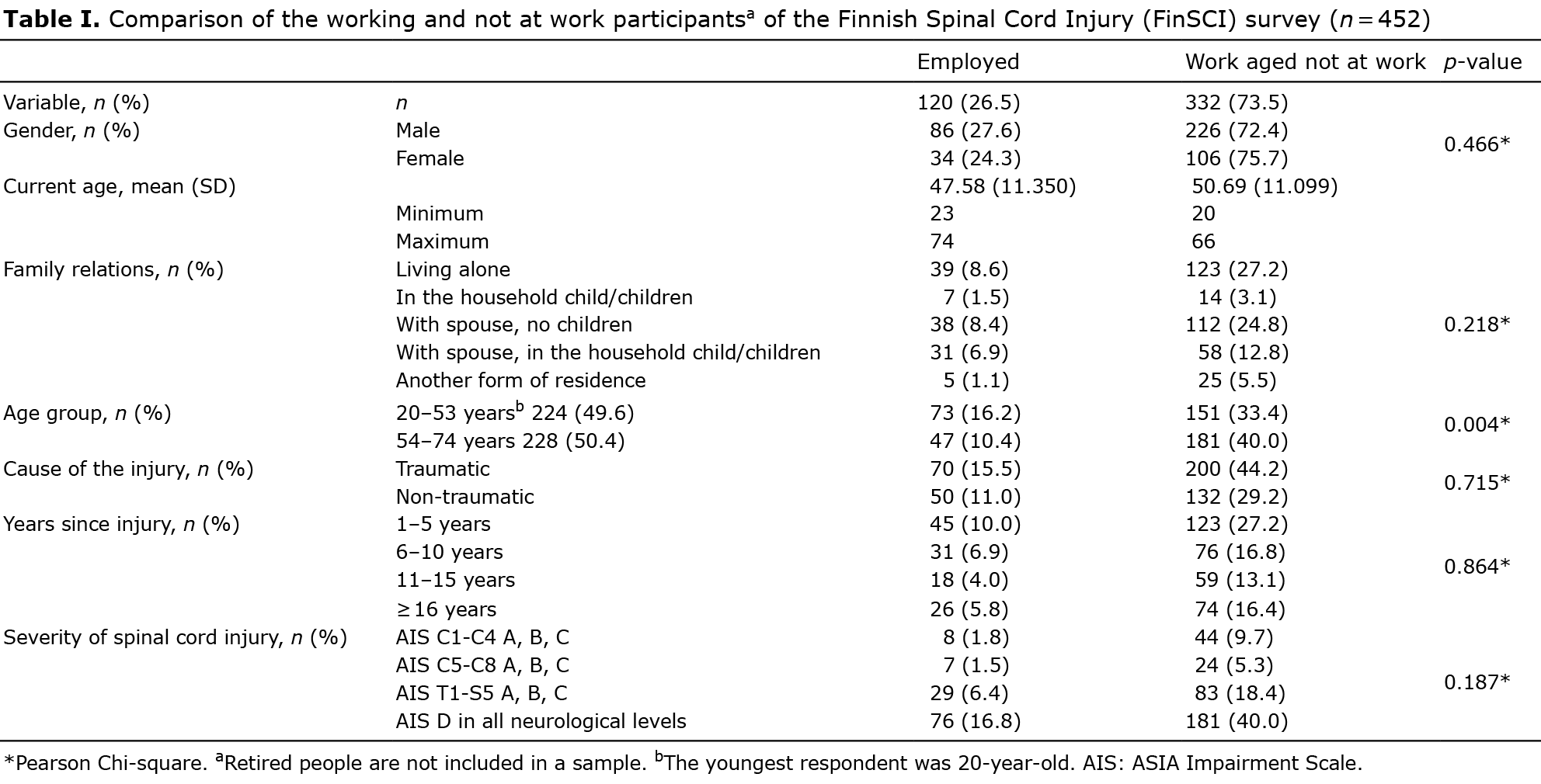
Of the 884 respondent participants in the FinSCI, all working responders and individually determined working-aged persons were included in this study (Table I). A working-aged person was determined according to an individual definition of retirement age by the Finnish Centre for Pensions (15). All retired people were excluded. The sample of work-aged persons not working and working persons were divided into 2 groups according to their employment status.
Survey
ICF acted as a framework in a study to capture what matters most to affected persons (16, 17). The detailed selection of 43 ICF categories, including the usage of SCI-related ICF Core Sets, is presented in the FinSCI Protocol (12). The outcome measures were selected on the coverage of the chosen ICF categories. PROMIS® was the principal generic instrument in the FinSCI (12).
PROMIS® is a dynamic and extensive set of self-report measures to evaluate various aspects of health, functioning or QoL (18). PROMIS® consists of item banks extensively covering 3 core health domains (Physical, Mental and Social) and, separately, Generic Global Health. Item banks are a collection of items that each measure the same domain. From Item banks, single items are valid to be used alone (19).
The final selection of preselected PROMIS® questions was made by a group of 7 volunteers with SCI by using the content validity indexing technique (CVI) (20). Only questions with I-CVI scores of 0.71 (good) or higher were chosen for the final questionnaire (12).
Outcome measures
Participants were sent an invitation letter containing a questionnaire, and they provided answers either electronically or in paper form. Employment was not defined, and respondents were asked to self-indicate whether they were employed full time or part time, or if they did not work; multiple status options were given. An employed person in Finland is generally defined as having worked for at least 1 h to earn a salary or entrepreneurial income during the survey week.
Of all the PROMIS® questions in the FinSCI questionnaire, PROMIS® Scale v1.2 – Global Health for Adults, 7 questions from 3 different PROMIS® Social Health short forms were selected for this study to evaluate respondents’ overall Physical, Mental, and Social Health. All PROMIS® short forms described above were translated into Finnish (21).
PROMIS® Global Health: Physical and Mental Health
The PROMIS® Global Health survey is a generic 10-item measure for self-reported QoL and Social, Physical and Mental Health. Its measures are used in a general context to globally reflect individuals’ assessment of their health (22). The validity of PROMIS® Global Health has been shown to be reliable, precise, and efficient in summarizing Physical and Mental Health in patient-reported outcome studies (9, 19).
The PROMIS® Global Health measure produces 2 scores: Physical Health (4 items on overall physical health, physical function, pain and fatigue) and Mental Health (4 items on QoL, mental health, satisfaction with social activities, and emotional problems) (19). Physical Health and Mental Health T-scores (range 20–80) can be calculated through an online scoring service provided by an Assessment Center (www.assessmentcenter.net/ac_scoringservice). The T-score distributions are standardized with a mean of 50 and a standard deviation (SD) of 10 for the general population of the USA, where higher T-scores represent more of the concept being measured (22). As standardized scores for Finland are unavailable, T-scores were calculated using the standard scores for the US population.
The scoring system of the PROMIS® Global Health allows each individual item to be examined separately to provide specific information (19). The PROMIS® Global Health Scale includes 2 items: Global01 (General Health) and Global09 (Satisfaction with Social Roles). These items are uncalibrated, and it is not possible to generate T-scores from them; their raw response scores are recommended to be utilized for analyses (23).
PROMIS Social Health
Social Health was measured by individually selected items from 3 PROMIS Social Health short Forms: (i) PROMIS Short Form v2.0 – Satisfaction with Social Roles and Activities 8a (3 items), which assesses satisfaction with performing usual social roles and activities, including the ability to work (24); (ii) PROMIS® Short Form v2.0 – Ability to Participate in Social Roles and Activities 8a (2 items), which measures ability to perform usual and important work, including work at home (25); and (iii) PROMIS® Item Bank v.1.0 – Satisfaction with Participation in Discretionary Social Activities 7a (2 items), which measures self-reported contentment with leisure interests and relationships with friends over the past 7 days (26). Three sum variables were formed from the raw scores of the 7 items above to measure Social Health. Conversion into T-scores could not be performed because fewer than 4 (or 50%) items from Short Form Banks were selected (27).
Response options
The quality of response options varied according to measurable variables. Physical and Mental Health response options for single questions varied measuring time, opinion, or quantity on a scale of 1–5. In Global Health, higher scores for responses indicate better health. General Health (Global01) and Satisfaction with Social Roles (Global09) were assessed on a 5-point scale, from “Poor” to “Excellent” (22). Pain was evaluated on a 0–10 scale (0 = No pain and 10 = Worst pain imaginable). Recoding response scores from 0–10 to 1–5 was done automatically in the HealthMeasures Scoring Service (22). In Social Health questions, response options measuring time, opinion or quantity for single questions were given on a Likert scale of 1–5.
Statistical analyses
Descriptive statistics were used to describe sex, age, family relations, cause of injury, years since injury, and severity of injury of the participant sample groups. Group differences were tested using χ2 test. Lesion characteristics were reported and analysed as recommended in the International Spinal Cord Injury Core dataset (version 2.0) (28).
The statistical tests used in the study were non-parametric tests, because data were not normally distributed. Sociodemographic data and SCI characteristics are presented as frequencies and percentages, means and standard deviations (SD), or medians and 25th and 75th percentiles (interquartile range; IQR).
Physical, Mental, General and Social Health were compared between employment status groups according to sex, age group, injury aetiology, time elapsed since injury and severity of SCI, using a Mann–Whitney U test.
For internal consistency of the PROMIS® Global Health, reliability analysis was used to calculate Cronbach’s α for Physical Health (4 items) and Mental Health (4 items). Internal consistencies of the Social Health sum variables were also assessed by Cronbach’s alpha, inter-item correlations and item-total correlations. A value of 0.70 is generally agreed to be acceptable, and values as low as 0.60 may be acceptable for exploratory research (29). The classification suggested by George & Mallery (30), “≥ 0.9: Excellent; ≥ 0.8: Good; ≥ 0.7: Acceptable; ≥ 0.6: Questionable; ≥ 0.5: Poor and ≥ 0.5: Unacceptable”, was used to interpret the Cronbach’s α values.
Binary logistic regression analysis, including estimated odds ratios (OR) with 95% confidence intervals (95% CI), was performed to identify the associations between the dependent variable (work participation) and each of the several demographic, injury-related and health-related independent variables. Both univariable and multivariable models were used. For binary logistic regression, because of the small number of cases in certain lesion groups when applying ISNCSCI injury severity classification, severity of SCI was divided into 2 groups: paraplegia and tetraplegia.
Results were considered statistically significant for p-values < 0.05. Statistical analyses were performed using SPSS version 26 software (SPSS Inc., Chicago, IL, USA). HealthMeasures Scoring Service powered by Assessment CenterSM was used to produce T-score calculations for PROMIS® Global Health.
RESULTS
Of the 884 respondent participants in the survey, 452 working and individually determined working-aged persons were included in this study: 87 (19.2%) were full-time employed, 33 (7.3%) part-time employed, and 332 (73.5%) were not working. The work-age not working group consisted of persons who were unemployed (4.5%), students (4.2%), people on disability pension (81.6%), on family leave (0.6%), on sick leave (2.4%), on vocational training (0.6%) or other reason (3.6%).
There was no difference in work participation between the sexes. Family relations or having children were not related to work participation. The study sample was divided into 2 age groups by median age (54 years). The 20–53 age group was found to be more involved in work compared with those aged 54–74 years. Of working persons, 12.5% had tetraplegia, and 87.5% had paraplegia.
The reliability analysis for internal consistency of the PROMIS® Global Health demonstrated good reliability for Mental Health; Cronbach’s α = 0.89 and questionable reliability for Physical Health; Cronbach’s α = 0.62 (29). In the Physical Health subscale, the ability to carry out everyday physical activities question (Global06) lowered the internal consistency of Physical Health in this data (alpha if item deleted 0.690). Social Health sum variables demonstrated high reliability, whereas Cronbach’s alphas were in Satisfaction with Participation in Discretionary Social Activities α = 0.815; Ability to Participate in Social Roles and Activities α = 0.945; and Satisfaction with Social Roles and Activities α = 0.877.
Physical, Mental, Social and General Health among study sample groups
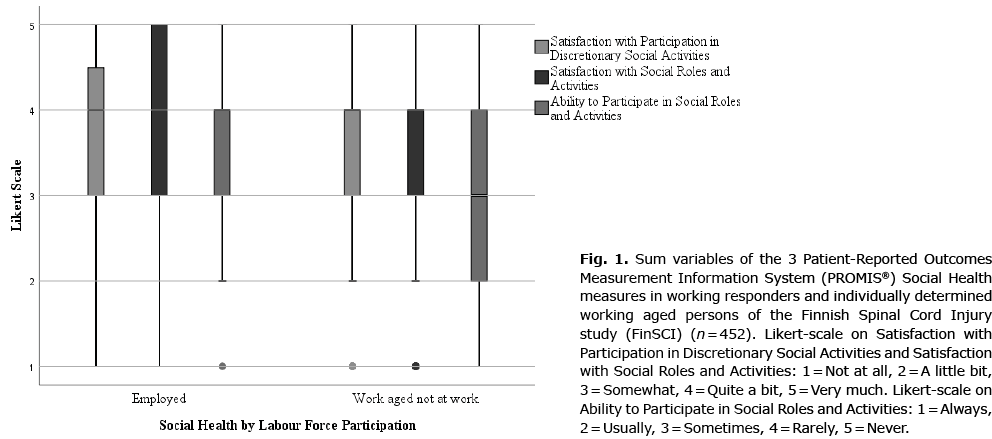
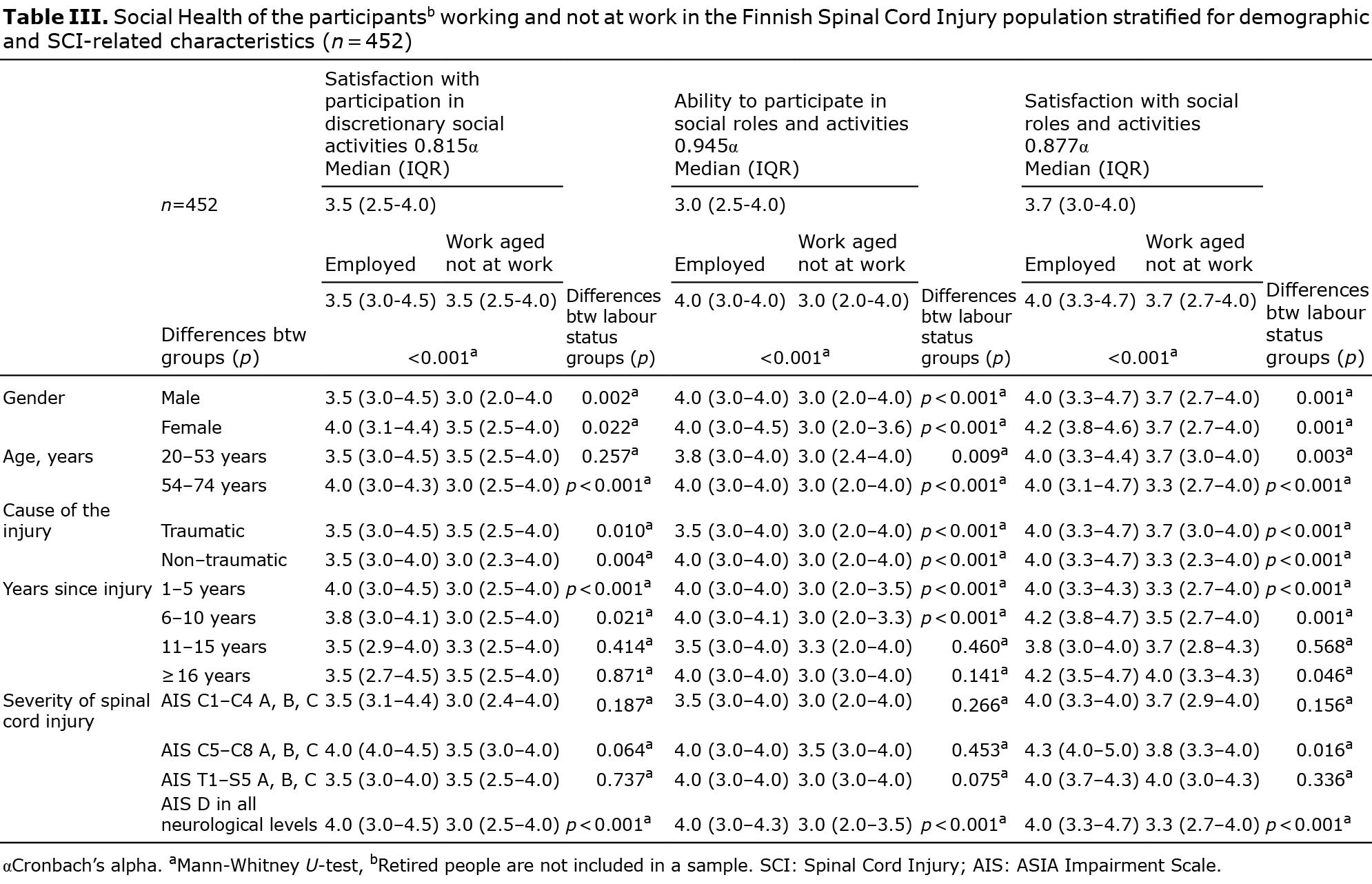
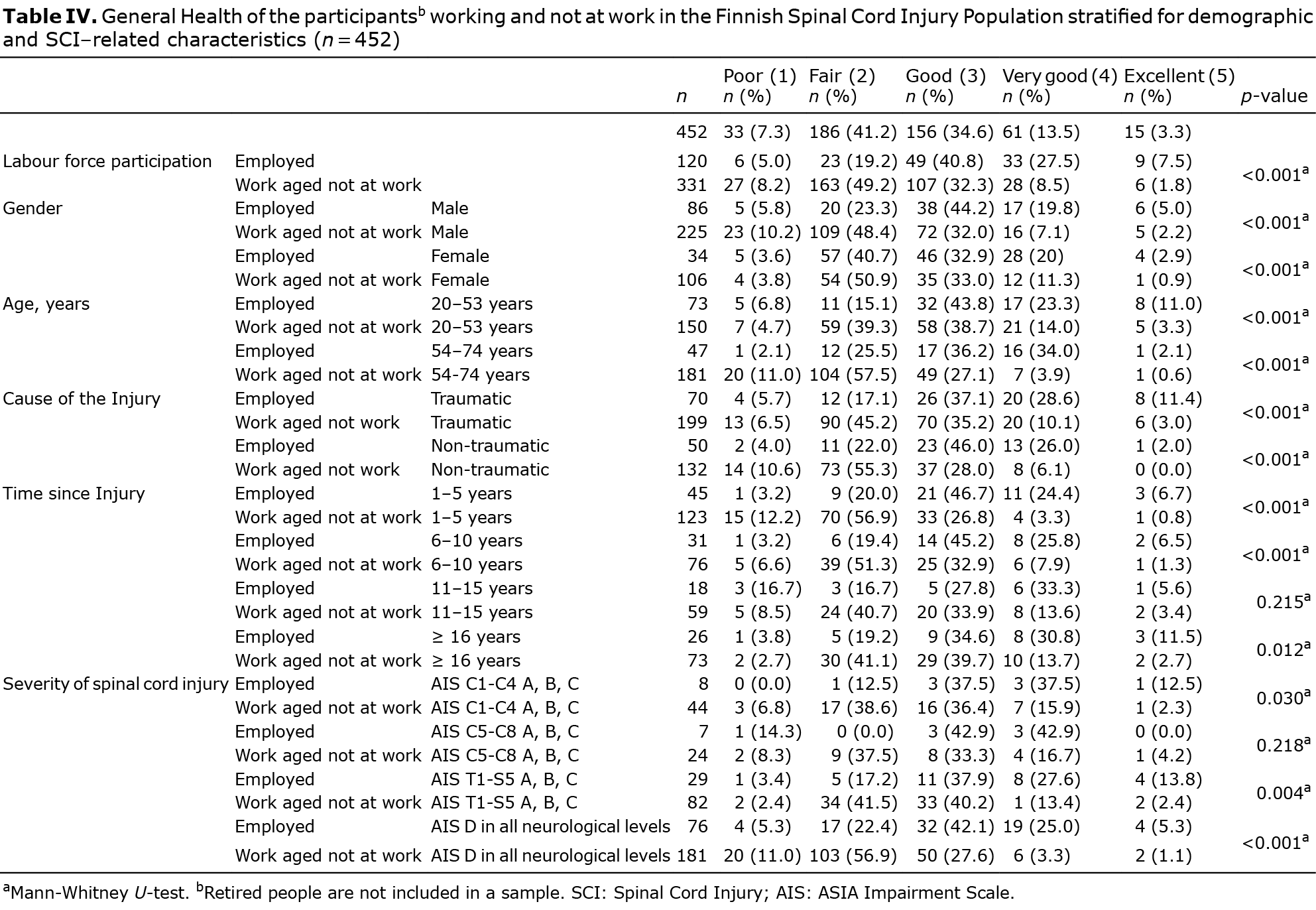
The employed group had better Physical, Mental (Table II) and General Health (Table IV), and, in addition, they expressed overall better Social Health (Table III/Fig. 1) and higher Satisfaction with Social Roles compared with work-aged persons not working (Table V).
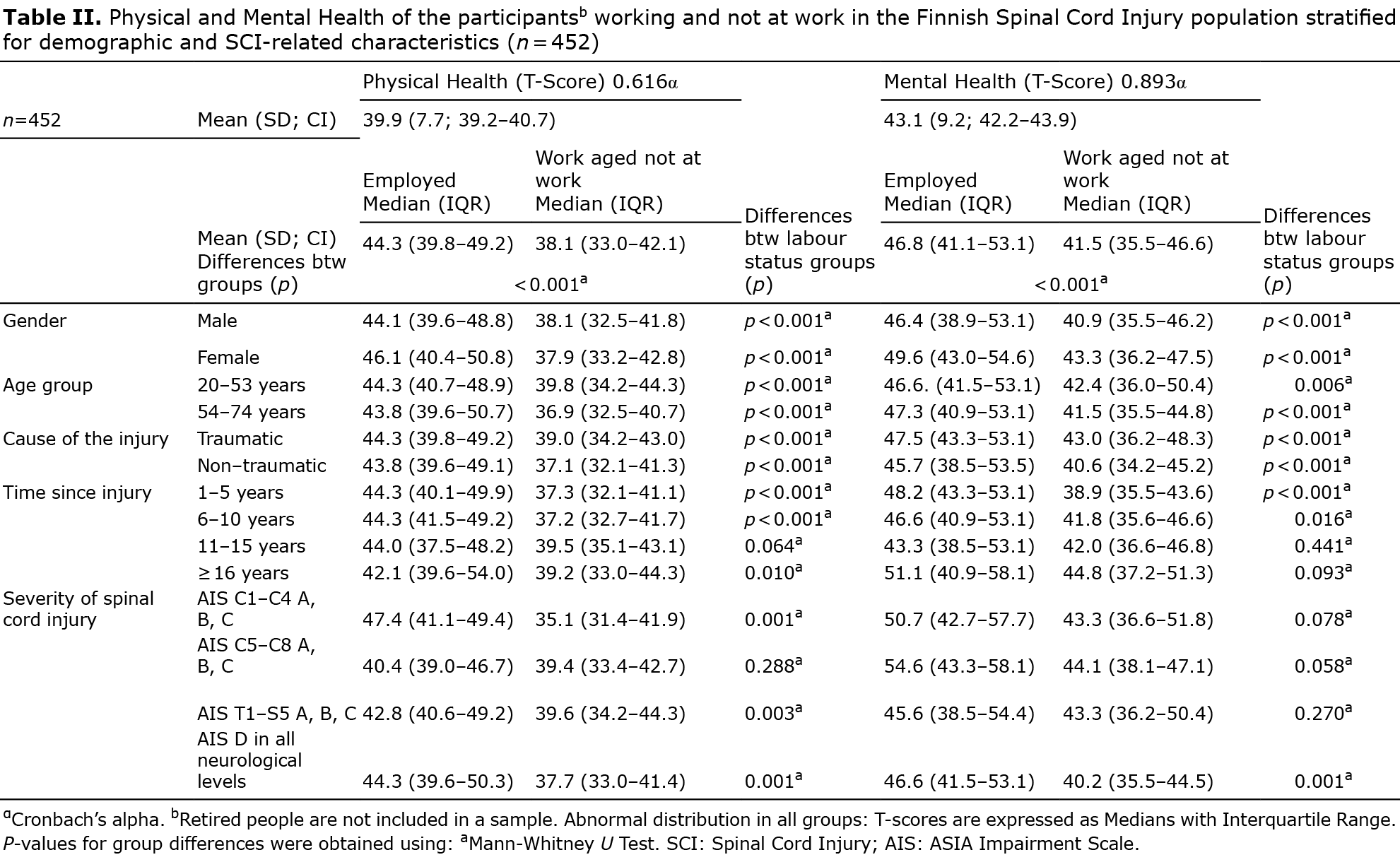

When comparing employed and work aged not working groups, the employed group had better Physical Health in all other groups except in a group where persons were injured 11–15 years previously and belonged to SCI severity group AIS C5–C8 A, B, C. These above-mentioned groups did not have statistically significant differences in Physical health whether they were at work or not.
Employed persons expressed higher Mental health compared with the work aged not working group in all other groups except in groups 11–15 and ≥ 16 years since injury and in higher SCI severity groups: AIS C1–C4 A, B, C, AIS C5–C8 A, B, C and AIS T1–S5 A, B, C.
General health between employed and not working groups was better in all employed groups, except for persons 11–15 years since injury and SCI severity group AIS C5–C8 A, B, C (Table IV).
Social Health was assessed between employed and not working groups according to 4 variables (Fig. 1, Table III and Table V). Employed persons expressed higher satisfaction with participation in discretionary social activities compared with the work aged not working group in all other groups except in the younger age group, groups 11–15 and ≥16 years since injury and in higher SCI severity groups: AIS C1–C4 A, B, C, AIS C5–C8 A, B, C and AIS T1–S5 A, B, C. Ability to participate in social roles and activities was higher in all other employed groups compared with work aged not working groups, except for persons 11–15 and ≥ 16 years since injury and those in higher SCI severity groups: AIS C1–C4 A, B, C, AIS C5–C8 A, B, C and AIS T1–S5 A, B, C. Sum variable Satisfaction with social roles and activities showed that the employed group was more satisfied with social roles compared with the work aged not working group in all other groups, except persons 11–15 years since injury and in SCI severity groups: AIS C1–C4 A, B, C and AIS T1–S5 A, B, C.
The single question about Satisfaction with Social Roles (Global09) confirmed that SCI severity group AIS C1–C4 A, B, C, and group 11–15 years since injury did not have statistically significant difference in satisfaction with social roles in the employed group compared with the work aged not working group (Table V).
Associated determinants of employment including odds ratios
Logistic regression was performed to additionally explore the effects of demographic- and injury-related factors, together with different aspects of perceived health on the likelihood of work participation. The logistic regression model was first performed separately for individual variables to assess crude odds ratios (OR) for work participation. In univariable models, age, Physical Health, Mental Health, and all Social Health measures were associated with the likelihood of work participation (Table VI).

Three multivariable logistic regression models were constructed: (i) demographic and injury-related comparison; (ii) adding Physical and Mental Health to the first model; and (iii) adding Social Health to the second model. Hosmer and Lemeshow’s tests suggested that the last 2 models fitted the data well (p = 0.016, p = 0.620 and p = 0.906 for models 1, 2 and 3, respectively). All 3 models were statistically significant (p = 0.042, p < 0.001 and p <0.001). The models explained 4.6%, 21.4% and 21.7% (Nagelkerke R2) of the variance of work participation and correctly classified 73.5%, 75.2% and 75.3% of cases.
Logistic regression shows that the odds of being employed decreased with increasing age (OR 0.976, 95% CI 0.959–0.994). The OR suggests that males were more likely to participate in work compared with females, but this result was not statistically significant in any of the models. The SCI classification group (paraplegia) and younger age were associated with an increased likelihood of work participation. When different aspects of health were evaluated, Physical Health was found to be the strongest indicator assessing the likelihood of being at work. It remained statistically significant in all 3 test cycles (Table VI). Also, from the Social Health items, Ability to Participate in Social Roles and Activities associated with the likelihood of work participation. The post-regression analysis for Physical Health’s 4 items revealed that Physical function and pain contribute to the statistical importance of Physical Health in assessing the likelihood of work participation.
DISCUSSION
Based on the first cross-sectional explorative observational study of the Finnish SCI population (FinSCI), this study found that the overall level of employment was 26.5% among persons in this study population, a value that is clearly lower than the overall level of employment (68.9%) in the general Finnish population aged 20–69 years (31). The current study broadly covered all aspects of health simultaneously, and it was observed that employed persons with SCI expressed better Physical, Mental, Social and General Health compared with the work-aged not working group. In particular, Physical Health (especially Pain and Physical function) and Ability to Participate in Social Roles were found to be the strongest indicators assessing the likelihood of being at work. Individuals who were less severely impaired (paraplegia) and at a younger age were associated with an increased likelihood of work participation. The current study showed that there are no differences in mental and social health in terms of employment status for persons having high lesion height (AIS C1–C4 A, B, C, AIS C5–C8 A, B, C and AIS T1–S5 A, B, C) and longer elapsed time from injury (≥ 16 years).
The use of PROMIS® Global Health to explain participation in work produced similar findings to those of other studies in terms of health-related factors. Poor health has been shown to be associated with a 59% (OR = 0.41; 95% CI 0.22–0.76) reduction in having paid employment (32). Two studies have found that a greater number of depressive symptoms are correlated with a modest, but statistically significant, decrease of 7–12% in the odds of being employed (33, 34).
Very few studies have been carried out on self-rated health in persons with SCI. Previous research evidence indicates that, although persons with SCI experience significant restrictions in activity and participation, many perceive their health as good (3). Physical ability is an important factor associated with self-rated health for persons with SCI, but the strength of the relationship depends on the level of injury (paraplegia vs tetraplegia) (35). One’s ability to perform activities that are most meaningful to carrying out one’s roles seem to shape self-rated health (3, 35). The ability to perform activities of daily living may be an even more accurate predictor of work participation than is health-related impairments (36).
Previous studies of work participation among persons with SCI have shown that some non-modifiable personal characteristics increase the likelihood of employment post-SCI, including being male; younger at injury; having a longer duration of injury (20–30 years); being less severely injured; and having a higher level of independence (including wheelchair skills) (2, 36, 37). Individuals with complete and incomplete tetraplegia (OR 0.46; OR 0.59, respectively) have been shown to have a lower likelihood of having paid work (35). Similarly, higher and more severe injury (i.e. tetraplegia and complete injury) was found to negatively influence employment in multiple studies (2).
PROMIS® Physical Health includes 4 items on overall physical health, physical function, pain, and fatigue. Pain as a single item is recognized in multiple previous studies as a barrier to performing paid work (10, 11, 36, 38, 39), but in individual studies, there was no statistically significant relationship between pain and work participation (37). Pain and fatigue have been found to independently associate with depression, but only pain has been associated with physical functioning (38). Physical functioning has been found to decline with increasing age, as well as with higher level of injury (38, 39). Physical Health’s 2 most important interconnected items, physical function and pain, are found to affect work participation when including increasing age (39).
Being older and having a higher age at injury have been shown to affect whether an individual is employed (1). Although the proportion of employed people tends to increase with age (up to approximately 30 years of age) and is maintained up to 40 years, younger age at injury and longer duration of injury (up to 20 years post-injury) are better predictors of being employed than age alone. Due to a non-linear effect of age on employment market participation, it is likely that work participation may decrease with increasing age at some time point after 40 years of age (2). Ageing persons with SCI have shown less social activity and have reported a greater number of health problems. Pain has been shown to have a correlation between chronological age and employment. Individuals 50 years of age and older appear to be at a higher risk of experiencing pain, but pain also seems to lead to a decrease in the likelihood of employment (1).
Participating in more social roles has been found to have a positive influence on employment for young/middle-aged and older adults (40). Social support has been shown to favour employment (33). Employment has a high value for persons with SCI because it has been shown to contribute to the creation of personal and collective identity and social recognition, distract from impairment and pain, and facilitate interaction with other people (5).
Study limitations
This study has several limitations. First, the cross-sectional design precludes drawing causal interpretations about the observed relationships, and the findings should be validated by using longitudinal studies. Secondly, the sample of working and not-at-work persons with SCI was limited nationally and was relatively small. This study sample describes health-related factors at the national level in a high-income country and cannot be generalized to low-income countries. Half of all potential participants responded to the survey, introducing the potential for responder bias in the current findings. An advantage of this study was that the data comprise the majority of persons with SCI in Finland, because all 3 specialized SCI centres in Finland collaborated by providing access to patient registers for data collection.
Conclusion
This study provides, for the first-time, data on employment rates and health-related determinants of work participation among the SCI population in Finland. The results are in line with those of previous studies performed in different countries concerning determinants of work participation and low employment rates across the SCI population. As a generic measure, PROMIS® Global Health produces similar findings to those of previous SCI studies of other legacy measures. The current study confirms that younger age, less severe impairment, good Physical Health, and Ability to Participate in Social Roles increase the chance of work participation. Particular attention should be paid to all domains of health-related factors in medical and vocational interventions aiming for sustainable work integration of persons with SCI.
ACKNOWLEDGEMENTS
The authors would like to thank all the individuals who participated and made this study possible. We also thank Kirsi Majamäki and Joonas Poutanen for saving questionnaires to electronic format.
Funding. This study was supported by the Finnish Association of People with Physical Disabilities (pr42105, 2017–2020), Oulu University Hospital (grant VTR K86709, 20.10.2017), the Department of Internal Medicine and Rehabilitation, Helsinki University Hospital (grants HUS/53/2017 §9, 9.6.2017, HUS/76/2018 § 11, 18.4.2018 and HUS/174/201 §1, 12.4.2019), and Validia Rehabilitation (grant HUS-VTR 9.3.2017).
The authors have no conflicts of interest to declare.
REFERENCES
- Krause JS, Bozard JL. Natural course of life changes after spinal cord injury: a 35-year longitudinal study. Spinal Cord 2012; 50: 227–231.
- Escorpizo R, Smith EM, Finger ME, Miller WC. Work and employment following spinal cord injury. 2018 [cited 2021 May 15] Available from: https://scireproject.com/wp-content/uploads/S6-Work-Employment-Chapter-_RE_AC_MF_RE-MQ-Apr-11-2019.pdf.
- Krahn GL, Suzuki R, Horner-Johnson W. Self-rated health in persons with spinal cord injury: relationship of secondary conditions, function and health status. Qual Life Res 2009; 18: 575–584.
- Ottomanelli L, Lind L. Review of critical factors related to employment after spinal cord injury: implications for research and vocational services. J Spinal Cord Med 2009; 32: 503–531.
- Leiulfsrud AS, Ruoranen K, Ostermann A, Reinhardt JD. The meaning of employment from the perspective of persons with spinal cord injuries in six European countries. Work (Reading, MA) 2016; 55: 133–144.
- Post MW, Reinhardt JD, Avellanet M, Escorpizo R, Engkasan JP, Schwegler U, et al. Employment among people with spinal cord injury in 22 countries across the world: results from the International Spinal Cord Injury Community Survey. Arch Phys Med Rehabil 2020; 101: 2157–2166.
- Eyh S, Nick E, Stirnimann D, Ehrat S, Miche F, Peter C, et al. Self-efficacy and self-esteem as predictors of participation in spinal cord injury – an ICF-based study. Spinal Cord 2012; 50: 699–706.
- Tucker CA, Cieza A, Riley AW, Stucki G, Lai JS, Bedirhan Ustun T, et al. Concept analysis of the Patient Reported Outcomes Measurement Information System (PROMIS®) and the International Classification of Functioning, Disability and Health (ICF). Qual Life Res 2014; 23: 1677–1686.
- Cella D, Riley W, Stone A, Rothrock N, Reeve B, Yount S, et al. The Patient-Reported Outcomes Measurement Information System (PROMIS) developed and tested its first wave of adult self-reported health outcome item banks: 2005–2008. J Clin Epidemiol 2010; 63: 1179–1194.
- Lidal IB, Huynh TK, Biering-Sørensen F. Return to work following spinal cord injury: a review. Disabil Rehabil 2007; 29: 1341–1375.
- Marti A, Reinhardt JD, Graf S, Escorpizo R, Post M. To work or not to work: labour market participation of people with spinal cord injury living in Switzerland. Spinal Cord 2012; 50: 521–526.
- Tallqvist S, Anttila H, Kallinen M, Koskinen E, Hämäläinen H, Kauppila A-M, et al. Health, functioning and accessibility among spinal cord injury population in Finland: Protocol for the FinSCI study. J Rehabil Med 2019; 51: 273–280.
- Coulter A. Measuring what matters to patients. BMJ 2017 Feb [cited 2021 Apr 10]; 2017; 356: 816–816. Available from: https://www.bmj.com/content/356/bmj.j816.
- Kirshblum SC, Burns SP, Biering-Sorensen F, Donovan W, Graves DE, Jha A, et al. International standards for neurological classification of spinal cord injury (Revised 2011). J Spinal Cord Med 2011; 34: 535–546.
- Finnish Centre for Pensions. 2021 [cited 2021 Apr 11]. Available from: https://www.etk.fi/.
- WHO. International Classification of Functioning, Disability and Health (ICF) Geneva: World Health Organization; 2001.
- Gross-Hemmi MH, Post MW, Ehrmann C, Fekete C, Hasnan N, Middleton JW, et al. Study Protocol of the International Spinal Cord Injury (InSCI) Community Survey. Am J Phys Med Rehabil 2017; 96: 23–34.
- PROMIS (Patient-Reported Outcomes Measurement Information System) Slides Introducing HealthMeasures. [cited 2021 Apr 11]. Available from: https://www.healthmeasures.net/explore-measurement-systems/promis/intro-to-promis.
- Hays RD, Bjorner J, Revicki DA, Spritzer K, Cella D. Development of physical and mental health summary scores from the Patient Reported Outcomes Measurement Information System (PROMIS) global items. Qual Life Res 2009; 18: 873–880.
- Polit DF, Beck CT, Owen SV. Is the CVI an acceptable indicator of content validity? Appraisal and recommendations. Res Nurs Health 2007; 30: 459–467.
- The national PROMIS-centre administered by Finnish Institute for health and welfare. PROMIS measures in Finnish. [Internet]. 2021 Apr 7 [Cited 2021 Apr 11] Available from: https://thl.fi/fi/web/toimintakyky/toimintakyvyn-arviointi/kansallinen-promis-keskus#Suomenkieliset%20PROMIS-mittarit_uusi.
- PROMIS. Global Health. A brief guide to the PROMIS© Global Health instruments. 2017 Jun 3 [cited 2021 Apr 11]. Available from: https://www.healthmeasures.net/images/PROMIS/manuals/PROMIS_Global_Scoring_Manual.pdf.
- PROMIS. Resource Center. Analysis of PROMIS Global01 and 09 questions [Internet]. 2021 [Cited 2021 Apr 11]. Available from: https://www.healthmeasures.net/resource-center/user-community/forum/promis/263-analysis-of-promis-global01-and-09-questions.
- PROMIS. A brief guide to the PROMIS Satisfaction with Social Roles and Activities instruments. [Internet] 2014 Oct 22 [Cited 2021 Apr 11] Available from: http://www.healthmeasures.net/images/promis/manuals/PROMIS_Satisfaction_with_Participation_in_Social_Roles_Scoring_Manual.pdf.
- PROMIS. A brief guide to the PROMIS® Profile instruments for adult respondent. [Internet] 2021 Apr 9 [Cited 2021 Apr 11] Available from: https://www.healthmeasures.net/images/PROMIS/manuals/Scoring_Manuals_/PROMIS_Adult_Profile_Scoring_Manual.pdf.
- PROMIS. A brief guide to the PROMIS® Satisfaction with Participation in Discretionary Social Activities v1.0 instruments. [Internet] 2018 March 22 [Cited 2021 Apr 11] Available from: https://www.healthmeasures.net/index.php?option=com_instruments&view=measure&id=176&Itemid=992.
- PROMIS. Satisfaction with Participation in Discretionary Social Activities. A brief guide to the PROMIS Satisfaction with Participation in Discretionary Social Activities v1.0 instruments.. 2015 Aug 7 [cited 2021 Apr 11]. Available from: https://www.healthmeasures.net/images/promis/manuals/PROMIS_Satisfaction_with_Participation_in_Discretionary_Social_Activities_Scoring_Manual.pdf.
- Biering-Sorensen F, DeVivo MJ, Charlifue S, Chen Y, New PW, Noonan V, et al. International Spinal Cord Injury Core Data Set (version 2.0)-including standardization of reporting. Spinal Cord 2017; 55: 759–764.
- Hair JF, Black WC, Babin BJ, Anderson RE. Multivariate data analysis: a global perspective. 7th edn. Upper Saddle River, NJ: Prentice Hall; 2010.
- George D, Mallery P. SPSS for Windows step by step: a simple guide and reference 18.0 update. 11th edn. Boston: Allyn & Bacon; 2011.
- Official Statistics of Finland: Labour Force Survey. 2021 May 25 [cited 2021 May 31]. Available from: https://tilastokeskus.fi/til/tyti/2021/04/tyti_2021_04_2021-05-25_tie_001_en.html.
- Botticello AL, Chen Y, Tulsky DS. Geographic variation in participation for physically disabled adults: the contribution of area economic factors to employment after spinal cord injury. Soc Sci Med 2012; 75: 1505–1513.
- Burns SM, Boyd BL, Hill J, Hough S. Psychosocial predictors of employment status among men living with spinal cord injury. Rehabil Psychol 2010; 55: 81–90.
- Lin M-R, Hwang H-F, Yu W-Y, Chen C-Y. A prospective study of factors influencing return to work after traumatic spinal cord injury in Taiwan. Arch Phys Med Rehabil 2009; 90: 1716–1722.
- Machacova K, Lysack C, Neufeld S. Self-rated health among persons with spinal cord injury: What is the role of physical ability? J Spinal Cord Med 2011; 34: 265–272.
- Schwegler U, Fellinghauer CS, Trezzini B, Siegrist J. Factors associated with labour market participation of persons with traumatic SCI in Switzerland: analyzing the predictive power of social background, health, functional independence, and the environment. Spinal Cord 2020; 58: 411–422.
- Roels EH, Reneman MF, Stolwijk-Swuste J, van Laake-Geelen CC, de Groot S, Aiaansen JJE, et al. Relationships between type of pain and work participation in people with long-standing spinal cord injury: results from a cross-sectional study. Spinal Cord 2018; 56: 453–460.
- Alschuler KN, Jensen MP, Sullivan-Singh SJ, Borson S, Smith AE, Molton IR. The association of age, pain, and fatigue with physical functioning and depressive symptoms in persons with spinal cord injury. J Spinal Cord Med 2013; 36: 483–491.
- Marti A, Boes S, Lay V, Escorpizo R, Reuben Escorpizo PT, Trezzini B. The association between chronological age, age at injury and employment: Is there a mediating effect of secondary health conditions? Spinal Cord 2016; 54: 239–244.
- Jetha A, Dumont FS, Noreau L, Leblond J. A Life course perspective to spinal cord injury and employment participation in Canada. Topics Spinal Cord Inj Rehabil 2014; 20: 310–320.