
Application of machine learning in dentistry: insights, prospects and challenges
DOI:
https://doi.org/10.2340/aos.v84.43345Keywords:
Machine learning, dental practices, integration, diagnostics, treatment planning, patient managementAbstract
Background: Machine learning (ML) is transforming dentistry by setting new standards for precision and efficiency in clinical practice, while driving improvements in care delivery and quality.
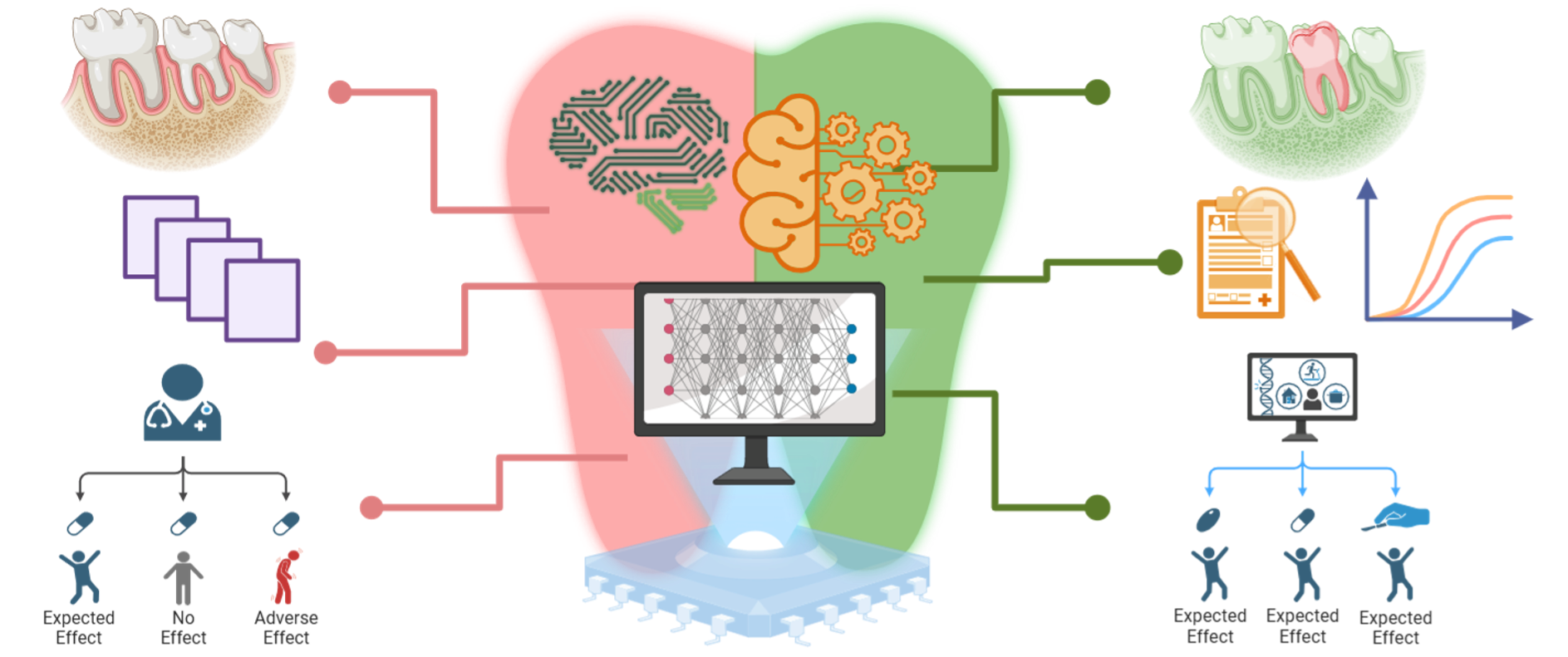
Objectives: This review: (1) states the necessity to develop ML in dentistry for the purpose of breaking the limitations of traditional dental technologies; (2) discusses the principles of ML-based models utilised in dental clinical practice and care; (3) outlines the application respects of ML in dentistry; and (4) highlights the prospects and challenges to be addressed.
Data and sources: In this narrative review, a comprehensive search was conducted in PubMed/MEDLINE, Web of Science, ScienceDirect, and Institute of Electrical and Electronics Engineers (IEEE) Xplore databases.
Conclusions: Machine Learning has demonstrated significant potential in dentistry with its intelligently assistive function, promoting diagnostic efficiency, personalised treatment plans and related streamline workflows. However, challenges related to data privacy, security, interpretability, and ethical considerations were highly urgent to be addressed in the next review, with the objective of creating a backdrop for future research in this rapidly expanding arena.
Clinical significance: Development of ML brought transformative impact in the fields of dentistry, from diagnostic, personalised treatment plan to dental care workflows. Particularly, integrating ML-based models with diagnostic tools will significantly enhance the diagnostic efficiency and precision in dental surgeries and treatments.
Downloads
References
Singh V, Chen S-S, Singhania M, Nanavati B, Gupta A. How are reinforcement learning and deep learning algorithms used for big data based decision making in financial industries – a review and research agenda. Int J Inf Manag Data Insights. 2022:2(2):100094. https://doi.org/10.1016/j.jjimei.2022.100094 DOI: https://doi.org/10.1016/j.jjimei.2022.100094
Wan J, Li X, Dai H-N, Kusiak A, Martinez-Garcia M, Li D. Artificial-intelligence-driven customized manufacturing factory: key technologies, applications, and challenges. Proc IEEE. 2020:109(4):377–98. https://doi.org/10.1109/JPROC.2020.3034808 DOI: https://doi.org/10.1109/JPROC.2020.3034808
Stanciu V, Rîndaşu S-M. Artificial intelligence in retail: benefits and risks associated with mobile shopping applications. Amfiteatru Econ. 2021:23(56):46–64. https://doi.org/10.24818/EA/2021/56/46 DOI: https://doi.org/10.24818/EA/2021/56/46
Nadella GS, Satish S, Meduri K, Meduri SS. A systematic literature review of advancements, challenges and future directions of AI And ML in healthcare. Int J Machine Learn Sustain Dev. 2023:5(3):115–30.
Callahan A, Shah NH. Chapter 19 – machine learning in healthcare. In: Sheikh A, Cresswell KM, Wright A, Bates DW, editors. Key Advanc-es in clinical informatics. Academic Press: Boston, MA, United States. 2017; 279–91. DOI: https://doi.org/10.1016/B978-0-12-809523-2.00019-4
Kalra N, Verma P, Verma S. Advancements in AI based healthcare techniques with FOCUS ON diagnostic techniques. Comput Biol Med. 2024:179:108917. https://doi.org/10.1016/j.compbiomed.2024.108917 DOI: https://doi.org/10.1016/j.compbiomed.2024.108917
Saraswat D, Bhattacharya P, Verma A, Prasad VK, Tanwar S, Sharma G, et al. Explainable AI for healthcare 5.0: opportunities and chal-lenges. IEEE Access. 2022:10:84486–517. https://doi.org/10.1109/ACCESS.2022.3197671 DOI: https://doi.org/10.1109/ACCESS.2022.3197671
Loh HW, Ooi CP, Seoni S, Barua PD, Molinari F, Acharya UR. Application of explainable artificial intelligence for healthcare: a systematic review of the last decade (2011–2022). Comput Methods Programs Biomed. 2022:226:107161. https://doi.org/10.1016/j.cmpb.2022.107161 DOI: https://doi.org/10.1016/j.cmpb.2022.107161
Jordan MI, Mitchell TM. Machine learning: trends, perspectives, and prospects. Science. 2015:349(6245):255–60. https://doi.org/10.1126/science.aaa8415 DOI: https://doi.org/10.1126/science.aaa8415
Hastie T, Tibshirani R, Friedman J, Hastie T, Tibshirani R, Friedman J. Overview of supervised learning. In: The elements of statistical learn-ing: data mining, inference, and prediction. Springer Series in Statistics. Springer: New York, NY. 2009. p. 9–41. DOI: https://doi.org/10.1007/978-0-387-84858-7_2
Tiwari A. Supervised learning: from theory to applications. Pandey, R., Khatri, S. K., Singh, N. k., Verma, P. Eds. Academic Press, Bos-ton,MA In: Artificial intelligence and machine learning for EDGE computing. Elsevier; 2022. p. 23–32. DOI: https://doi.org/10.1016/B978-0-12-824054-0.00026-5
Barlow HB. Unsupervised learning. Neural Comput. 1989:1(3):295–311. https://doi.org/10.1162/neco.1989.1.3.295 DOI: https://doi.org/10.1162/neco.1989.1.3.295
Qayyum A, Tahir A, Butt MA, Luke A, Abbas HT, Qadir J, et al. Dental caries detection using a semi-supervised learning approach. Sci Rep. 2023:13(1):749. https://doi.org/10.1038/s41598-023-27808-9 DOI: https://doi.org/10.1038/s41598-023-27808-9
Sutton RS, Barto AG. Reinforcement learning. J Cogn Neurosci. 1999:11(1):126–34. DOI: https://doi.org/10.1007/3-540-49097-3_2
Zou, J.; Han, Y.; So, S-S. Overview of artificial neural networks. Methods in Molecular Biology 2009, 458 (1), 14-22 DOI: https://doi.org/10.1007/978-1-60327-101-1_2
Yamashita R, Nishio M, Do RKG, Togashi K. Convolutional neural networks: an overview and application in radiology. Insights Imaging. 2018:9(4):611–29. https://doi.org/10.1007/s13244-018-0639-9 DOI: https://doi.org/10.1007/s13244-018-0639-9
Kecman V. Support vector machines – an introduction. Wang, L. Eds;Springer, Berlin, Heidelberg. In: Support vector machines: theory and applications. Springer; 2005. p. 1–47. DOI: https://doi.org/10.1007/10984697_1
Schwendicke F, Krois J. Data dentistry: how data are changing clinical care and research. J Dent Res. 2022:101(1):21–9. https://doi.org/10.1177/00220345211020265 DOI: https://doi.org/10.1177/00220345211020265
Joda T, Waltimo T, Pauli-Magnus C, Probst-Hensch N, Zitzmann NU. Population-based linkage of big data in dental research. Int J Environ Res Public Health. 2018;15(11): 2357 https://doi.org/10.3390/ijerph15112357 DOI: https://doi.org/10.3390/ijerph15112357
Sheng JQ, Hu PJ, Liu X, Huang TS, Chen YH. Predictive analytics for care and management of patients with acute diseases: deep learning-based method to predict crucial complication phenotypes. J Med Internet Res. 2021:23(2):e18372. https://doi.org/10.2196/18372 DOI: https://doi.org/10.2196/18372
Mahant R, Agrawal SV, Kapoor S, Agrawal I. Milestones of dental history. CHRISMED J Health Res. 2017:4(4):229–34. https://doi.org/10.4103/cjhr.cjhr_37_17 DOI: https://doi.org/10.4103/cjhr.cjhr_37_17
White SC, Yoon DC, Tetradis S. Digital radiography in dentistry: what it should do for you. J Calif Dent Assoc. 1999:27(12):942–52. https://doi.org/10.1080/19424396.2016.12221191 DOI: https://doi.org/10.1080/19424396.2016.12221191
Różyło-Kalinowska I. Panoramic radiography in dentistry. Clin Dent Rev. 2021;5(1): 26 https://doi.org/10.1007/s41894-021-00111-4 DOI: https://doi.org/10.1007/s41894-021-00111-4
Nasseh I, Al-Rawi W. Cone beam computed tomography. Dent Clin. 2018:62(3):361–91. DOI: https://doi.org/10.1016/j.cden.2018.03.002
Abramovitch K, Rice DD. Basic principles of cone beam computed tomography. Dent Clin North Am. 2014:58(3):463–84. https://doi.org/10.1016/j.cden.2014.03.002 DOI: https://doi.org/10.1016/j.cden.2014.03.002
Naeem A, Basem MMA, Thamer AA-G, Mai AHAA, Mahmoud E. High-speed dental tools in dentistry – a review. Int J Dent Med Specialty. 2018:5(1):18–21. DOI: https://doi.org/10.30954/2350-0921.01.2018.4
Coluzzi DJ. Fundamentals of dental lasers: science and instruments. Dent Clin. 2004:48(4):751–70. https://doi.org/10.1016/j.cden.2004.05.003 DOI: https://doi.org/10.1016/j.cden.2004.05.003
Wigdor HA, Walsh Jr, JT, Featherstone JD, Visuri SR, Fried D, Waldvogel JL. Lasers in dentistry. Lasers Surg Med. 1995:16(2):103–33. DOI: https://doi.org/10.1002/lsm.1900160202
Mishra SK, Chowdhary R. Heat generated by dental implant drills during osteotomy – a review. J Indian Prosthodont Soc. 2014:14(2):131–43. https://doi.org/10.1007/s13191-014-0350-6 DOI: https://doi.org/10.1007/s13191-014-0350-6
Davidowitz G, Kotick PG. The use of CAD/CAM in dentistry. Dent Clin. 2011:55(3):559–70. https://doi.org/10.1016/j.cden.2011.02.011 DOI: https://doi.org/10.1016/j.cden.2011.02.011
Jain R, Takkar R, Jain G, Takkar R, Deora N, Jain R. CAD-CAM the future of digital dentistry: a review. IP Ann Prosthodont Restor Dent. 2016:2(2):33–6.
Patil M, Kambale S, Patil A, Mujawar K. Digitalization in dentistry: CAD/CAM-a review. Acta Sci Dent Sci. 2018:2(1):12–16.
Raja’a M, Farid F. Computer-based technologies in dentistry: types and applications. J Dent (Tehran, Iran). 2016:13(3):215.
Joda T, Waltimo T, Probst-Hensch N, Pauli-Magnus C, Zitzmann NU. Health data in dentistry: an attempt to master the digital challenge. Public Health Genomics. 2019:22(1–2):1–7. https://doi.org/10.1159/000501643 DOI: https://doi.org/10.1159/000501643
Leonardi R, Giordano D, Maiorana F, Spampinato C. Automatic cephalometric analysis: a systematic review. Angle Orthod. 2008:78(1):145–51. DOI: https://doi.org/10.2319/120506-491.1
Pittayapat P, Limchaichana‐Bolstad N, Willems G, Jacobs R. Three‐dimensional cephalometric analysis in orthodontics: a systematic review. Orthod Craniofac Res. 2014:17(2):69–91. https://doi.org/10.1111/ocr.12034 DOI: https://doi.org/10.1111/ocr.12034
Weir T. Clear aligners in orthodontic treatment. Aust Dent J. 2017:62:58–62. https://doi.org/10.1111/adj.12480 DOI: https://doi.org/10.1111/adj.12480
d’Apuzzo F, Perillo L, Carrico CK, Castroflorio T, Grassia V, Lindauer SJ, et al. Clear aligner treatment: different perspectives between orthodontists and general dentists. Prog Orthod. 2019:20:1–9. DOI: https://doi.org/10.1186/s40510-019-0263-3
Katsumata A, Fujita H. Progress of computer-aided detection/diagnosis (CAD) in dentistry CAD in dentistry. Jpn Dent Sci Rev. 2014:50(3):63–8. https://doi.org/10.1016/j.jdsr.2014.03.002 DOI: https://doi.org/10.1016/j.jdsr.2014.03.002
Ren R, Luo H, Su C, Yao Y, Liao W. Machine learning in dental, oral and craniofacial imaging: a review of recent progress. PeerJ. 2021:9:e11451. https://doi.org/10.7717/peerj.11451 DOI: https://doi.org/10.7717/peerj.11451
Farook TH, Jamayet NB, Abdullah JY, Alam MK. Machine learning and intelligent diagnostics in dental and orofacial pain management: a systematic review. Pain Res Manag. 2021:2021:6659133. https://doi.org/10.1155/2021/6659133 DOI: https://doi.org/10.1155/2021/6659133
Silva VKS, Vieira WA, Bernardino ÍM, Travençolo BAN, Bittencourt MAV, Blumenberg C, et al. Accuracy of computer-assisted image analy-sis in the diagnosis of maxillofacial radiolucent lesions: a systematic review and meta-analysis. Dentomaxillofac Radiol. 2019;49(3): 20190204 https://doi.org/10.1259/dmfr.20190204 DOI: https://doi.org/10.1259/dmfr.20190204
Park WJ, Park JB. History and application of artificial neural networks in dentistry. Eur J Dent. 2018:12(4):594–601. https://doi.org/10.4103/ejd.ejd_325_18 DOI: https://doi.org/10.4103/ejd.ejd_325_18
Singh NK, Raza K. Progress in deep learning-based dental and maxillofacial image analysis: a systematic review. Expert Syst Appl. 2022;199:116968. DOI: https://doi.org/10.1016/j.eswa.2022.116968
Chaurasia A, Namachivayam A, Koca-Unsal RB, Lee JH. Deep-learning performance in identifying and classifying dental implant systems from dental imaging: a systematic review and meta-analysis. J Periodontal Implant Sci. 2024:54(1):3–12. https://doi.org/10.5051/jpis.2300160008 DOI: https://doi.org/10.5051/jpis.2300160008
Schwendicke F, Golla T, Dreher M, Krois J. Convolutional neural networks for dental image diagnostics: a scoping review. J Dent. 2019:91:103226. https://doi.org/10.1016/j.jdent.2019.103226 DOI: https://doi.org/10.1016/j.jdent.2019.103226
Kumar VS, Kumar PR, Yadalam PK, Anegundi RV, Shrivastava D, Alfurhud AA, et al. Machine learning in the detection of dental cyst, tu-mor, and abscess lesions. BMC Oral Health. 2023:23(1):833. https://doi.org/10.1186/s12903-023-03571-1 DOI: https://doi.org/10.1186/s12903-023-03571-1
Ganta GK, Mosca RC, Varsani R, Murthy VR, Cheruvu K, Lu M, et al. Automation in dentistry with mechanical drills and lasers for implant osteotomy: a narrative-scoping review. Dent J (Basel) 2023;12(1): 8 DOI: https://doi.org/10.3390/dj12010008
Farook TH, Ahmed S, Jamayet NB, Rashid F, Barman A, Sidhu P, et al. Computer-aided design and 3-dimensional artificial/convolutional neural network for digital partial dental crown synthesis and validation. Sci Rep. 2023:13(1):1561. https://doi.org/10.1038/s41598-023-28442-1 DOI: https://doi.org/10.1038/s41598-023-28442-1
Shujaat S. Automated machine learning in dentistry: a narrative review of applications, challenges, and future directions. Diagnostics. 2025;15:273. https://doi.org/10.3390/diagnostics15030273 DOI: https://doi.org/10.3390/diagnostics15030273
Finkelstein J, Zhang F, Levitin SA, Cappelli D. Using big data to promote precision oral health in the context of a learning healthcare sys-tem. J Public Health Dent. 2020;80(Suppl 1):S43–58. https://doi.org/10.1111/jphd.12354 DOI: https://doi.org/10.1111/jphd.12354
Ourang, S. A.; Sohrabniya, F.; Mohammad-Rahimi, H.; Dianat, O.; Aminoshariae, A.; Nagendrababu, V.; et al. Artificial intelligence in en-dodontics: fundamental principles, workflow, and tasks. Int Endod J. 2024. DOI: https://doi.org/10.1111/iej.14127
Patel JS, Su C, Tellez M, Albandar JM, Rao R, Iyer V, et al. Developing and testing a prediction model for periodontal disease using ma-chine learning and big electronic dental record data. Front Artif Intell. 2022:5:979525. https://doi.org/10.3389/frai.2022.979525 DOI: https://doi.org/10.3389/frai.2022.979525
Collins GS, Dhiman P, Ma J, Schlussel MM, Archer L, Van Calster B, et al. Evaluation of clinical prediction models (part 1): from develop-ment to external validation. BMJ. 2024:384:e074819. https://doi.org/10.1136/bmj-2023-074819 DOI: https://doi.org/10.1136/bmj-2023-074819
Hung M, Voss MW, Rosales MN, Li W, Su W, Xu J, et al. Application of machine learning for diagnostic prediction of root caries. Gerodon-tology. 2019:36(4):395–404. https://doi.org/10.1111/ger.12432 DOI: https://doi.org/10.1111/ger.12432
Frantsve-Hawley J, Abt E, Carrasco-Labra A, Dawson T, Michaels M, Pahlke S, et al. Strategies for developing evidence-based clinical practice guidelines to foster implementation into dental practice. J Am Dent Assoc. 2022:153(11):1041–52. https://doi.org/10.1016/j.adaj.2022.07.012 DOI: https://doi.org/10.1016/j.adaj.2022.07.012
Mohammad-Rahimi H, Motamedian SR, Rohban MH, Krois J, Uribe SE, Mahmoudinia E, et al. Deep learning for caries detection: a system-atic review. J Dent. 2022:122:104115. https://doi.org/10.1016/j.jdent.2022.104115 DOI: https://doi.org/10.1016/j.jdent.2022.104115
Reyes LT, Knorst JK, Ortiz FR, Ardenghi TM. Machine learning in the diagnosis and prognostic prediction of dental caries: a systematic re-view. Caries Res. 2022:56(3):161–70. https://doi.org/10.1159/000524167 DOI: https://doi.org/10.1159/000524167
Zanini LGK, Rubira-Bullen IRF, Nunes F. A systematic review on caries detection, classification, and segmentation from X-ray images: meth-ods, datasets, evaluation, and open opportunities. J Imaging Inform Med. 2024:37(4):1824–45. https://doi.org/10.1007/s10278-024-01054-5 DOI: https://doi.org/10.1007/s10278-024-01054-5
Huang W, Wu J, Mao Y, Zhu S, Huang GF, Petritis B, et al. Developing a periodontal disease antibody array for the prediction of severe periodontal disease using machine learning classifiers. J Periodontol. 2020:91(2):232–43. https://doi.org/10.1002/JPER.19-0173 DOI: https://doi.org/10.1002/JPER.19-0173
López-Cortés XA, Matamala F, Venegas B, Rivera C. Machine-learning applications in oral cancer: a systematic review. Appl Sci. 2022;12(11): 5715 https://doi.org/10.3390/app12115715 DOI: https://doi.org/10.3390/app12115715
Liu J, Chen Y, Li S, Zhao Z, Wu Z. Machine learning in orthodontics: challenges and perspectives. Adv Clin Exp Med. 2021:30(10):1065–74. https://doi.org/10.17219/acem/138702 DOI: https://doi.org/10.17219/acem/138702
Umer F, Habib S. Critical analysis of artificial intelligence in endodontics: a scoping review. J Endod. 2022:48(2):152–60. https://doi.org/10.1016/j.joen.2021.11.007 DOI: https://doi.org/10.1016/j.joen.2021.11.007
Ragodos R, Wang T, Padilla C, Hecht JT, Poletta FA, Orioli IM, et al. Dental anomaly detection using intraoral photos via deep learning. Sci Rep. 2022:12(1):11577. https://doi.org/10.1038/s41598-022-15788-1 DOI: https://doi.org/10.1038/s41598-022-17668-0
Lin S, Hao X, Liu Y, Yan D, Liu J, Zhong M. Lightweight deep learning methods for panoramic dental X-ray image segmentation. SAI Compu-ting Conference (SAI), London, UK, Neural Comput Appl. 2022:35(11):8295–306. https://doi.org/10.1007/s00521-022-08102-7 DOI: https://doi.org/10.1007/s00521-022-08102-7
Mahmoud YE, Labib SS, Mokhtar HM. Teeth periapical lesion prediction using machine learning techniques. In: 2016 SAI computing confer-ence (SAI). IEEE; 2016. p. 129–34. DOI: https://doi.org/10.1109/SAI.2016.7555972
Alsubai S. A critical review on the 3D cephalometric analysis using machine learning. Computers. 2022:11(11):154. https://doi.org/10.3390/computers11110154 DOI: https://doi.org/10.3390/computers11110154
Dinesh Y, Ramalingam K, Ramani P, Deepak RM. Machine learning in the detection of oral lesions with clinical intraoral images. Cureus. 2023;15(8): e44018
Naik DA, Mohana RM, Ramu G, Lalitha YS, SureshKumar M, Raghavender K. Analyzing histopathological images by using machine learning techniques. Appl Nanosci. 2023:13(3):2507–13. https://doi.org/10.1007/s13204-021-02217-4 DOI: https://doi.org/10.1007/s13204-021-02217-4
Lee K-S, Jha N, Kim Y-J. Risk factor assessments of temporomandibular disorders via machine learning. Sci Rep. 2021:11(1):19802. https://doi.org/10.1038/s41598-021-98837-5 DOI: https://doi.org/10.1038/s41598-021-98837-5
Farook TH, Dudley J. Automation and deep (machine) learning in temporomandibular joint disorder radiomics: a systematic review. J Oral Rehabil. 2023:50(6):501–21. https://doi.org/10.1111/joor.13440 DOI: https://doi.org/10.1111/joor.13440
Wu Y, Zeng L, Hong Y, Li X, Chen X. A real-time interactive restoration system for intraoral digital videos using segment anything model. Digit Health. 2024;10:20552076241269536. https://doi.org/10.1177/20552076241269536 DOI: https://doi.org/10.1177/20552076241269536
Felsch, M.; Meyer, O.; Schlickenrieder, A.; Engels, P.; Schönewolf, J.; Zöllner, F.; et al. Detection and localization of caries and hypomineral-ization on dental photographs with a vision transformer model. NPJ Digit Med. 2023;6:198. DOI: https://doi.org/10.1038/s41746-023-00944-2
Der Sarkissian H, Lucka F, van Eijnatten M, Colacicco G, Coban SB, Batenburg KJ. A cone-beam X-ray computed tomography data collection designed for machine learning. Sci Data. 2019:6(1):215. https://doi.org/10.1038/s41597-019-0235-y DOI: https://doi.org/10.1038/s41597-019-0235-y
Gassenmaier S, Küstner T, Nickel D, Herrmann J, Hoffmann R, Almansour H, et al. Deep learning applications in magnetic resonance imag-ing: has the future become present? Diagnostics. 2021:11(12):2181. https://doi.org/10.3390/diagnostics11122181 DOI: https://doi.org/10.3390/diagnostics11122181
Feher B, Tussie C, Giannobile WV. Applied artificial intelligence in dentistry: emerging data modalities and modeling approaches. Front Artif Intell. 2024:7:1427517. https://doi.org/10.3389/frai.2024.1427517 DOI: https://doi.org/10.3389/frai.2024.1427517
Kim S. Personalized dental treatment planning using AI-powered algorithms. Afr J Artif Intell Sustain Dev. 2023:3(1):12–20.
Xu, M.; Ye, C.; Zeng, Z.; Chang, C.; Qi, S.; Wu, Y.; et al. IEEE International Conference on Digital Health (ICDH), Shenzhen, China, 2024. 2024, p. 244–56. DOI: https://doi.org/10.1109/ICDH62654.2024.00047
Rohrer C, Krois J, Patel J, Meyer-Lueckel H, Rodrigues JA, Schwendicke F. Segmentation of dental restorations on panoramic radiographs using deep learning. Diagnostics (Basel) 2022;12(6): 1316 https://doi.org/10.3390/diagnostics12061316 DOI: https://doi.org/10.3390/diagnostics12061316
Grischke J, Johannsmeier L, Eich L, Griga L, Haddadin S. Dentronics: towards robotics and artificial intelligence in dentistry. Dent Mater. 2020:36(6):765–78. https://doi.org/10.1016/j.dental.2020.03.021 DOI: https://doi.org/10.1016/j.dental.2020.03.021
Setzer FC, Li J, Khan AA. The use of artificial intelligence in endodontics. J Dent Res. 2024:103(9):853–62. https://doi.org/10.1177/00220345241255593 DOI: https://doi.org/10.1177/00220345241255593
Huang, H.; Zheng, O.; Wang, D.; Yin, J.; Wang, Z.; Ding, S.; et al. ChatGPT for shaping the future of dentistry: the potential of multi-modal large language model. Int J Oral Sci. 2023;15:29. https://doi.org/10.1038/s41368-023-00239-y DOI: https://doi.org/10.1038/s41368-023-00239-y
Saibene, A. M.; Allevi, F.; Calvo-Henriquez, C.; Maniaci, A.; Mayo-Yáñez, M.; Paderno, A.; et al. Reliability of large language models in managing odontogenic sinusitis clinical scenarios: a prelimi-nary multidisciplinary evaluation. Eur Arch Otorhinolaryngol. 2024;281:1835–41. https://doi.org/10.1007/s00405-023-08372-4 DOI: https://doi.org/10.1007/s00405-023-08372-4
Schwendicke F, Samek W, Krois J. Artificial intelligence in dentistry: chances and challenges. J Dent Res. 2020:99(7):769–74. https://doi.org/10.1177/0022034520915714 DOI: https://doi.org/10.1177/0022034520915714
Boitor O, Stoica F, Mihăilă R, Stoica LF, Stef L. Automated machine learning to develop predictive models of metabolic syndrome in pa-tients with periodontal disease. Diagnostics. 2023:13(24):3631. https://doi.org/10.3390/diagnostics13243631 DOI: https://doi.org/10.3390/diagnostics13243631
Kanwal L, Gulzar M, Idrees W, Ikram F, Sukhia RH, Fida M. The application of virtual reality and augmented reality in dentistry – a litera-ture review. J Pak Med Assoc. 2024:74(4 (Supple-4)):S126–31. https://doi.org/10.47391/JPMA.AKU-9S-19 DOI: https://doi.org/10.47391/JPMA.AKU-9S-19
Thunki P, Kukalakunta Y, Yellu RR. Autonomous dental healthcare systems – a review of AI and robotics integration. J Mach Learn Pharm Res. 2024:4(1):38–49.
Bengtson SH, Bak T, Andreasen Struijk LN, Moeslund TB. A review of computer vision for semi-autonomous control of assistive robotic manipulators (ARMs). Disabil Rehabil Assist Technol. 2020:15(7):731–45. https://doi.org/10.1080/17483107.2019.1615998 DOI: https://doi.org/10.1080/17483107.2019.1615998
Additional Files
Published
Issue
Section
License
Copyright (c) 2025 Lin Wang, Yanyan Xu, Weiqian Wang, Yuanyuan Lu

This work is licensed under a Creative Commons Attribution 4.0 International License.
 Acta Odontologica Scandinavica publishes high quality original research papers as well as critical reviews relevant on diseases of the oral cavity, their treatment, epidemiology and associated biomaterials and their development.

